
BPC-157 Peptide Research Guide: Molecular Pathways, Scientific Studies & Analysis
bpc 157 peptide research: Explore molecular pathways, stability profiles, amino acid sequence, TB-500 comparisons, and RP-HPLC/LC-MS verification for laboratory teams.
📋 Table of Contents
The core question in bpc 157 peptide research is what molecular pathways, stability characteristics, and analytical identity methods define this synthetic 15-amino-acid peptide fragment in laboratory models. BPC-157 is a synthetic pentadecapeptide derived from Body Protection Compound (BPC), and current bpc 157 peptide research focuses on sequence verification, signaling networks, and comparison with TB-500—strictly for in vitro research use.
Key takeaways
- bpc 157 peptide research examines a synthetic pentadecapeptide composed of a 15-amino-acid sequence derived from Body Protection Compound (BPC), originally identified in gastric protein studies.
- The peptide is studied for molecular stability, sequence integrity, and signaling pathway interactions in controlled laboratory systems—not for any human or veterinary application.
- Scientific comparisons between BPC-157 and TB-500 focus on distinct peptide structures, origins, and research pathways, not direct equivalency.
- Analytical methods including RP-HPLC and LC-MS support peptide identity and purity research; certificate-of-analysis review, lot traceability, and research-use-only labeling are procurement baselines.
- No dosing, human consumption, or medical application is implied anywhere in bpc 157 peptide research content; all information remains framed as educational research literacy for in vitro work only.
What does this bpc 157 peptide research guide cover?
This guide covers the molecular structure, amino acid sequence relationships, synthetic peptide chemistry, laboratory characterization methods, and scientific comparisons relevant to BPC-157. The focus is on how researchers evaluate peptide identity, purity, stability, and signaling behavior in experimental models.
bpc 157 peptide research in this document includes sequence analysis, storage and handling documentation, certificates of analysis, and comparisons with TB-500 peptide research. It does not include dosing protocols, therapeutic claims, or any human or veterinary use guidance.
Researchers using this guide should treat every product as a lyophilized research peptide intended strictly for in vitro laboratory research. All procurement decisions should begin with documentation review, not assumptions about biological activity.
What is BPC-157 peptide?
The BPC-157 peptide is a synthetic pentadecapeptide composed of a 15-amino-acid sequence derived from research involving Body Protection Compound (BPC), a peptide fragment originally identified during gastric protein studies. Scientific interest in BPC-157 focuses on understanding peptide stability, molecular signaling mechanisms, and structure-function relationships.
Unlike many naturally occurring peptides that undergo rapid structural changes in biological environments, BPC-157 peptides have been investigated in laboratory settings because of their molecular characteristics and sequence stability observed during experimental research. These stability attributes are a central reason bpc 157 peptide research continues to expand.
Modern studies involving peptide BPC 157 examine amino acid arrangement, synthetic peptide chemistry, molecular interactions, and analytical characterization rather than general outcome-based interpretations. Researchers treat the peptide as a defined chemical entity with measurable identity and purity parameters.
💡 Key Takeaway: What is BPC-157 peptide?
Why is BPC-157 studied as a stable synthetic peptide fragment?
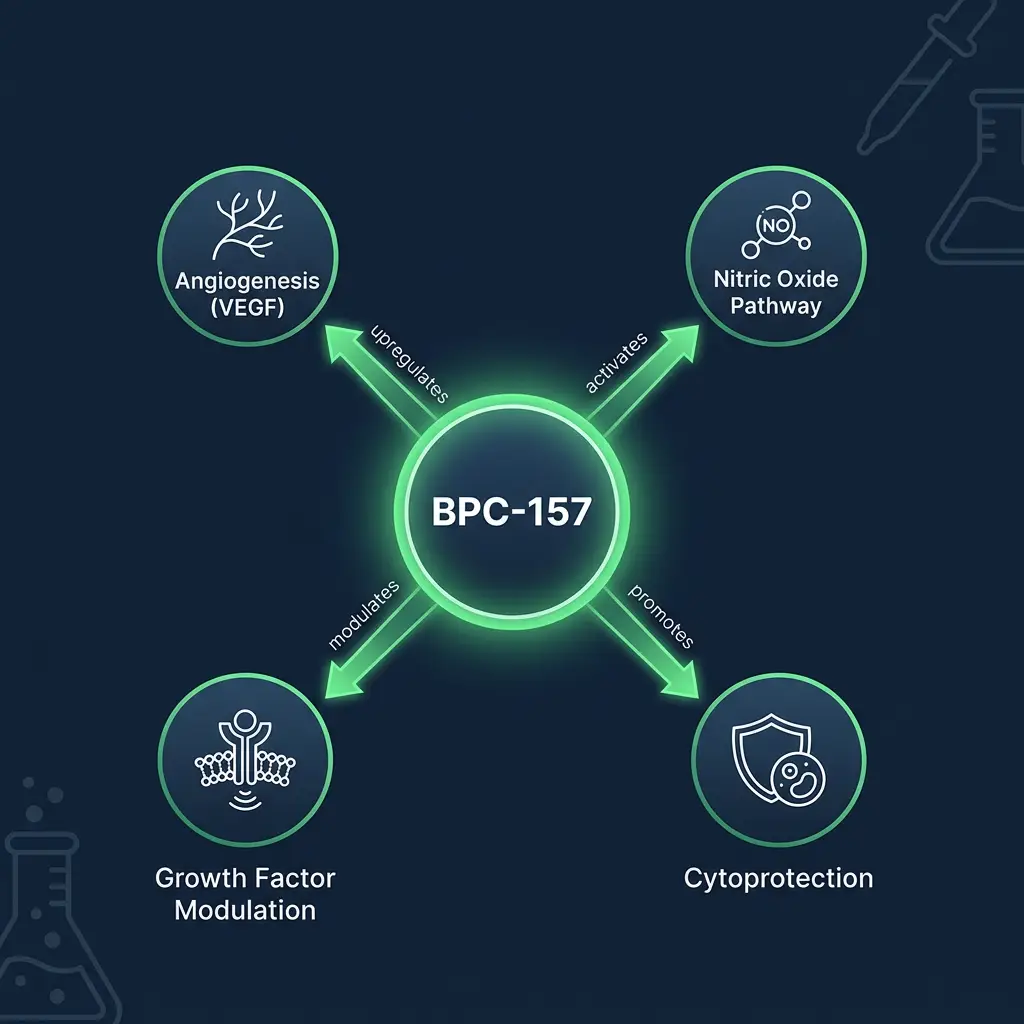
Researchers study synthetic peptide fragments such as BPC-157 to understand how specific amino acid sequences influence molecular stability, structural behavior, and peptide interaction pathways in experimental systems. The stability characteristics of BPC-157 are a key research attribute because they allow reproducible laboratory observations under defined conditions.
Because the peptide is produced as a lyophilized research peptide, storage conditions and handling procedures are documented in product-specific certificates of analysis. Researchers confirm lyophilized format integrity and stability parameters through analytical characterization rather than assuming general properties.
In bpc 157 peptide research, stability is not an abstract concept. It is evaluated through mass spectrometry and chromatographic identity checks that verify the peptide has not degraded or aggregated after synthesis, shipping, and storage. This documentation-first approach reduces variability across experimental replicates.
What is the molecular structure and amino acid sequence of BPC-157?
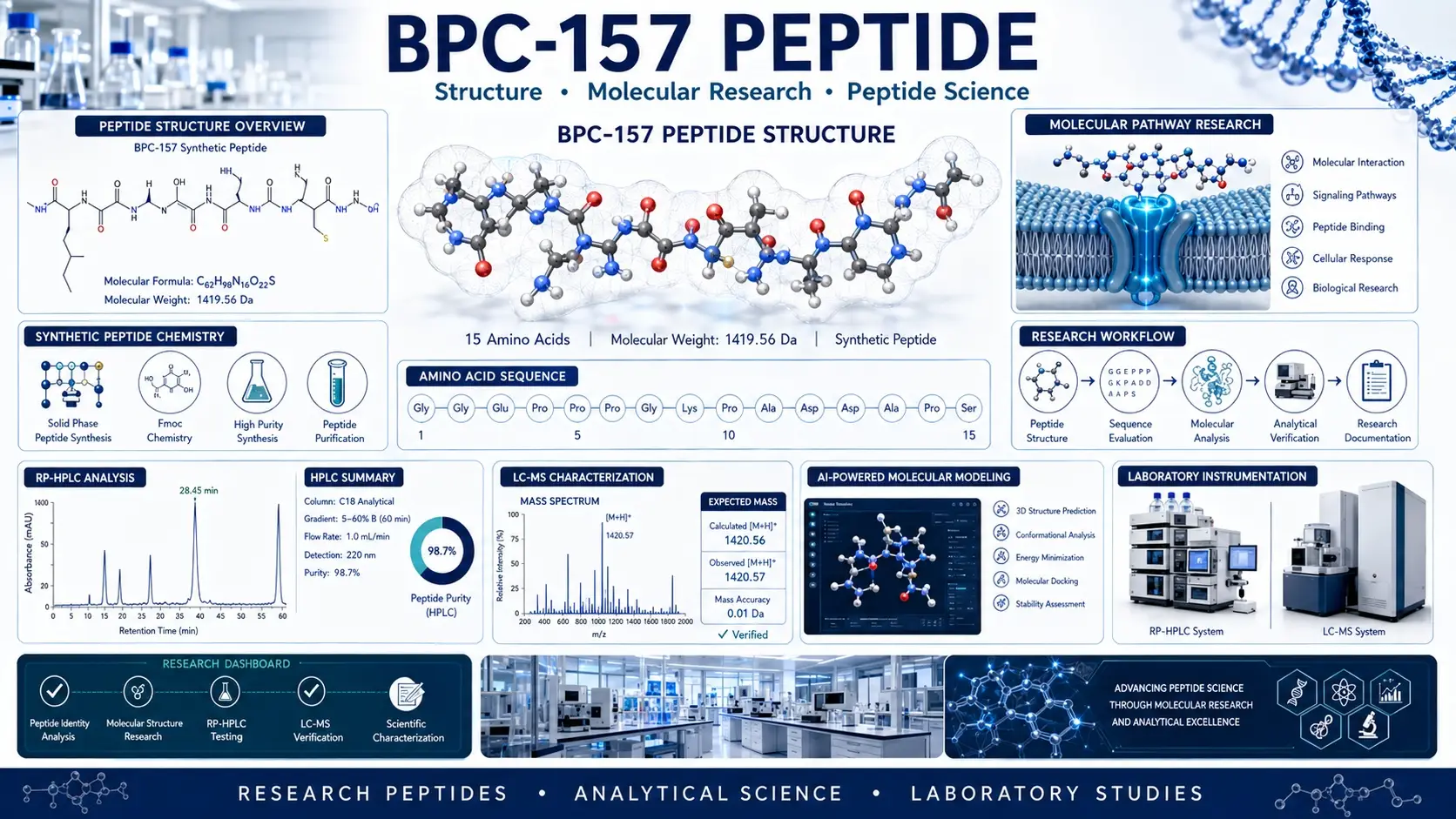
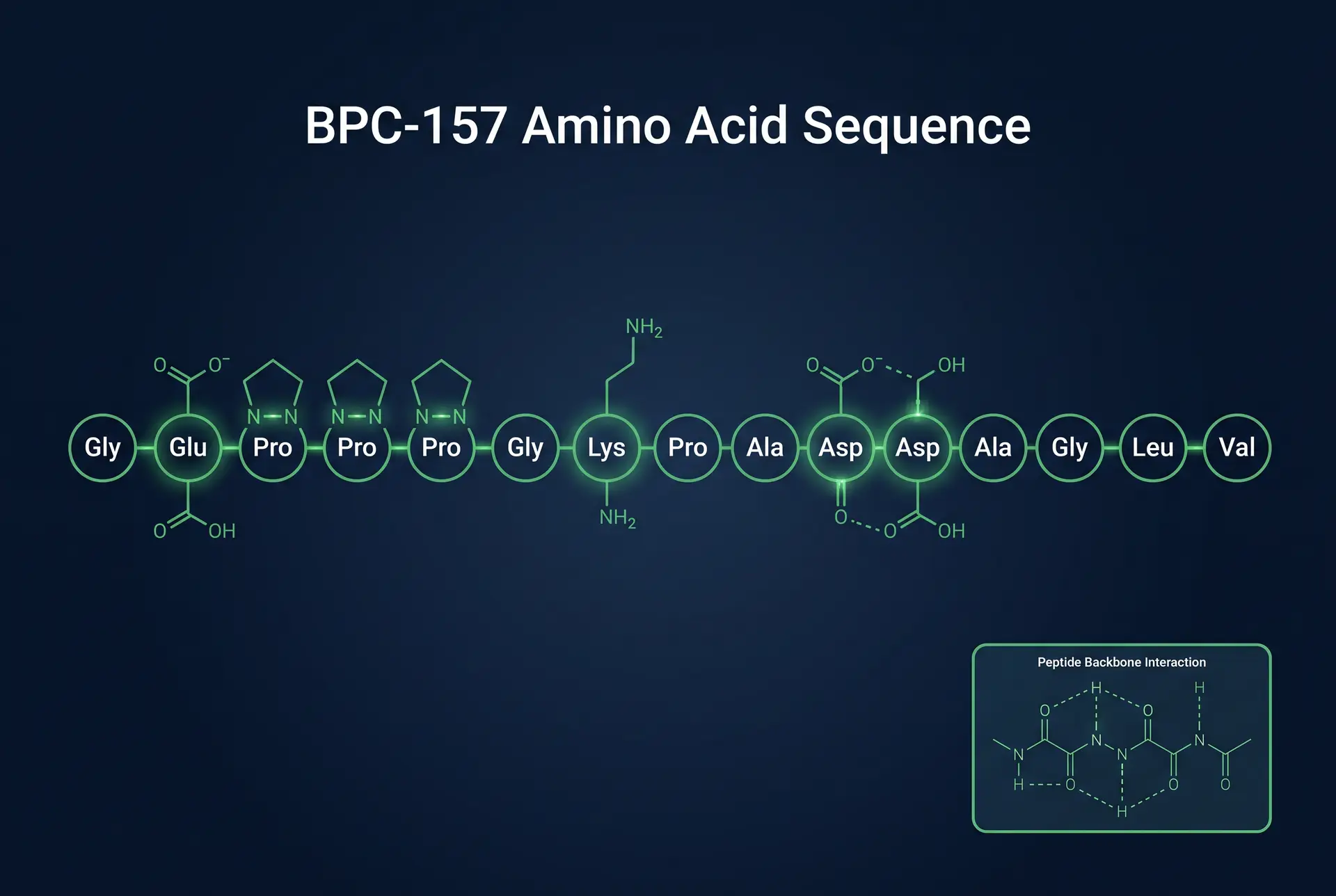
The molecular identity of BPC-157 peptide is defined by its specific amino acid arrangement. Sequence analysis is an important part of peptide research because even small structural variations can influence molecular properties and research observations. The peptide is a pentadecapeptide, meaning exactly 15 amino acids are present in a defined order.
Scientists analyze BPC-157 peptides through peptide chemistry methods to evaluate molecular composition, sequence integrity, and structural characteristics. Analytical methods include LC-MS and RP-HPLC for peptide characterization, with purity and identity reported on certificates of analysis.
The table below summarizes the core molecular profile used in bpc 157 peptide research.
| Feature | BPC-157 Research Profile |
|—|—|
| Peptide Type | Synthetic Pentadecapeptide |
| Sequence Length | 15 Amino Acids |
| Research Origin | Body Protection Compound-Derived Fragment |
| Research Category | Synthetic Peptide Biology |
| Analytical Methods | LC-MS, RP-HPLC, Molecular Characterization |
Researchers should verify the exact sequence against the certificate of analysis for every lot. Minor sequence truncations or modifications can alter research observations, which is why identity testing remains a non-negotiable baseline in bpc 157 peptide research.
What is the research background of Body Protection Compound (BPC)?
BPC-157 originates from scientific investigations involving Body Protection Compound, a peptide sequence studied for its molecular properties and biological signaling pathways in research models. The original BPC sequence was identified during gastric protein research, and the synthetic fragment BPC-157 represents a defined portion of that larger peptide.
Researchers continue examining this peptide category to understand how specific amino acid sequences may interact with complex molecular systems and contribute to broader peptide science knowledge. The research background emphasizes molecular characterization and structure-function analysis, not clinical translation.
For additional context on peptide evidence boundaries and documentation standards, researchers may consult Peptide Research Education: Evidence Boundaries & Documentation (2026). External literature can also be reviewed through PubMed search results for BPC 157.
💡 Key Takeaway: What is the research background of Body Protection Compound (BPC)?
How is BPC-157 classified as a synthetic peptide?
As a synthetic research peptide, BPC-157 is produced using controlled peptide synthesis methods that allow scientists to study defined molecular structures. Synthetic peptides are valuable research tools because their sequences can be characterized and analyzed with precision.
Research involving peptides BPC 157 commonly explores peptide chemistry, molecular stability, analytical testing, and comparison with other synthetic peptide categories. Classification as a synthetic pentadecapeptide means the exact 15-amino-acid sequence can be verified through mass spectrometry and chromatographic identity checks.
In bpc 157 peptide research, classification matters because it determines how a peptide is documented, stored, and tested. Synthetic peptides are not biological extracts; they are manufactured with defined purity thresholds and must be treated as chemical research reagents rather than naturally derived compounds.
How do BPC-157 and TB-500 peptide research compare?
BPC 157 and TB 500 peptide research reflects growing scientific interest in comparing different peptide research categories. While both peptides are commonly discussed together, they represent distinct molecular structures and research areas.
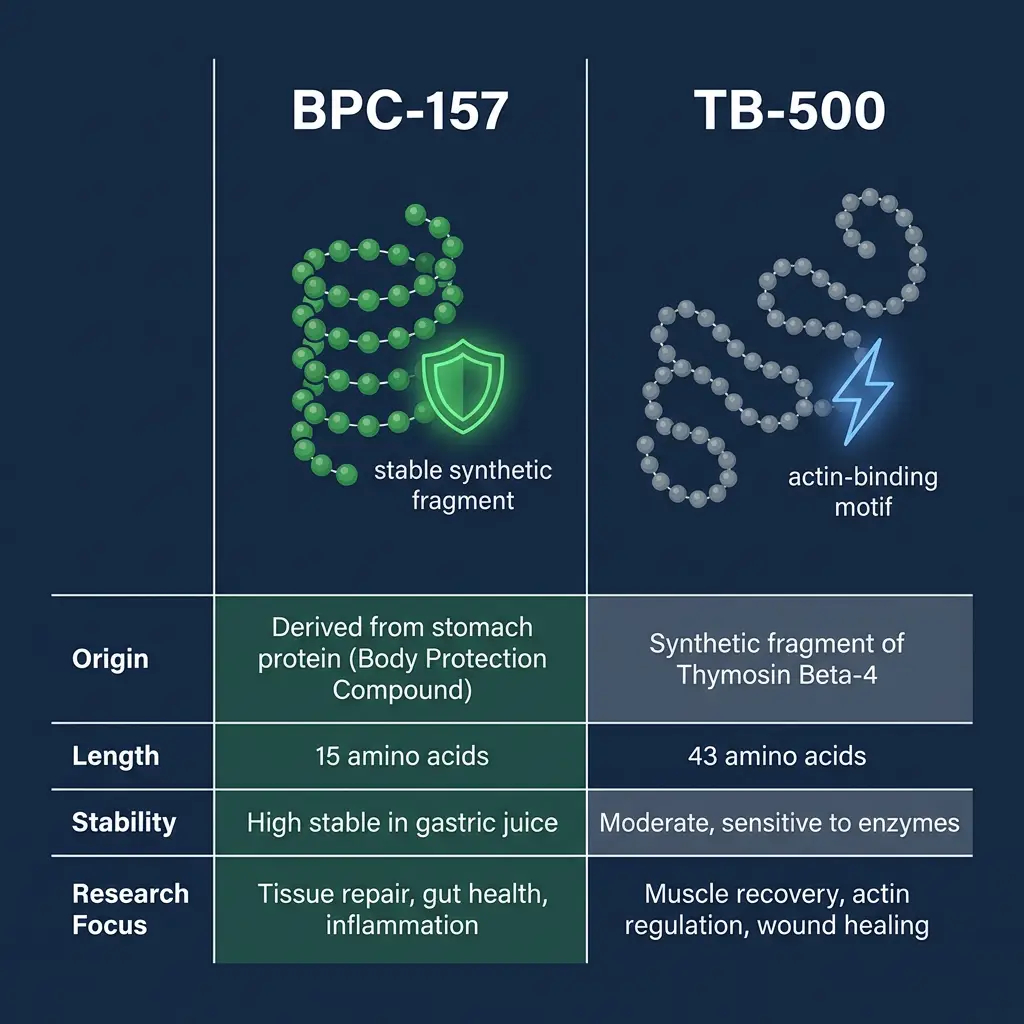
Scientific comparisons between BPC-157 and TB-500 focus on peptide origin, amino acid structure, molecular pathways, and analytical characterization. TB-500 is a synthetic fragment of thymosin beta-4, while BPC-157 is derived from Body Protection Compound research. These origins produce different sequence lengths and structural properties.
The table below outlines the primary research distinctions.
| Parameter | BPC-157 Research | TB-500 Research |
|—|—|—|
| Origin | Body Protection Compound fragment | Thymosin beta-4 fragment |
| Sequence Length | 15 amino acids | 43 amino acids |
| Research Focus | Stability, signaling, sequence integrity | Actin regulation, cell migration |
| Analytical Identity | RP-HPLC, LC-MS | RP-HPLC, LC-MS |
bpc 157 peptide research does not claim equivalency between these two peptides. Each has separate literature, separate analytical baselines, and separate experimental design requirements.
How does peptide sequence determine molecular research characteristics?
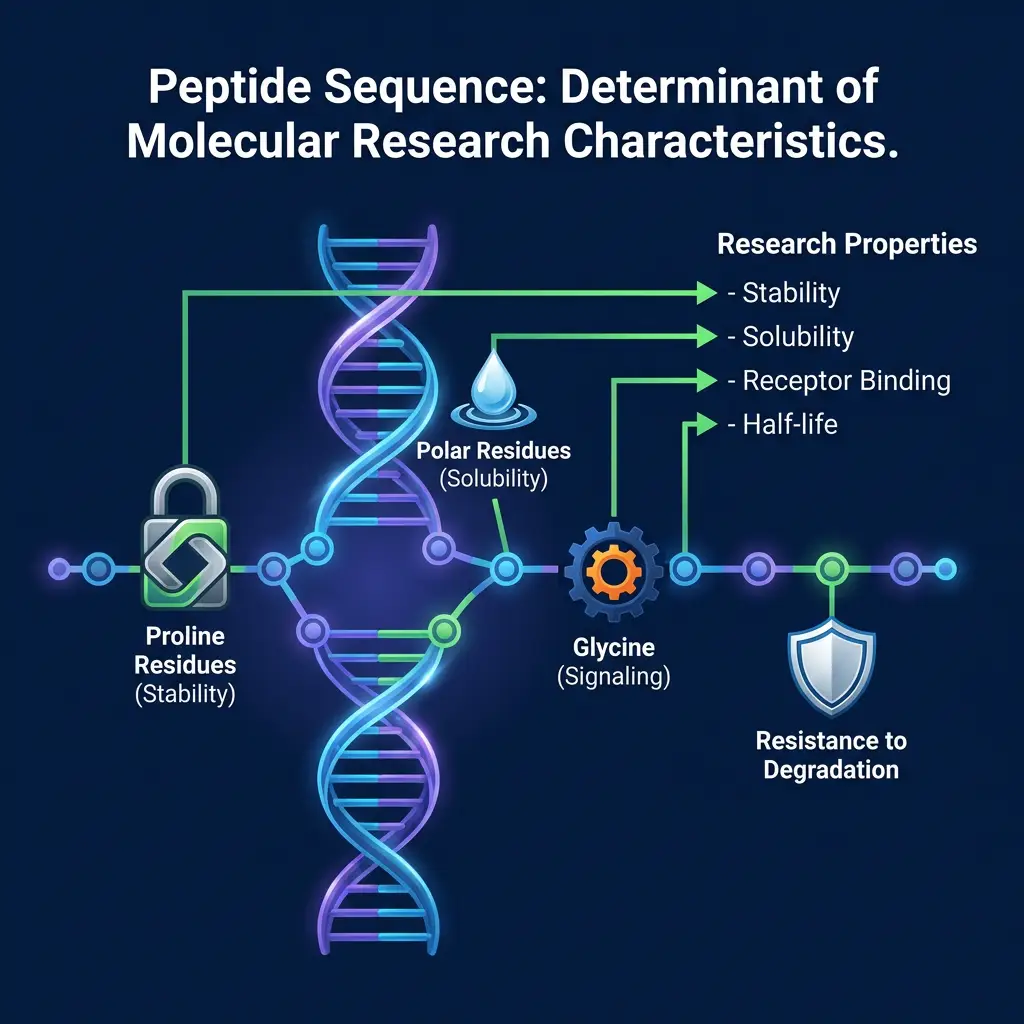
Peptide sequence is the primary determinant of molecular research characteristics because each amino acid contributes specific chemical properties such as charge, hydrophobicity, and hydrogen-bonding capacity. In bpc 157 peptide research, sequence integrity is verified before any downstream experimental work begins.
Even a single amino acid substitution can alter peptide folding, solubility, and interaction with binding partners. This is why researchers use LC-MS to confirm the exact mass-to-charge profile and RP-HPLC to assess purity. A peptide that fails identity testing should not be used in experimental models.
For procurement guidance that prioritizes analytical documentation, researchers may review Peptide Suppliers USA: How to Choose a Trusted Source. The sequence defines the molecule; the documentation proves the sequence.
💡 Key Takeaway: How does peptide sequence determine molecular research characteristics?
What mechanisms and scientific studies are explored in bpc 157 peptide research?
Current bpc 157 peptide research explores molecular mechanisms related to peptide stability, protein interaction networks, and signaling pathway modulation in experimental systems. Scientific studies examine how the 15-amino-acid sequence behaves under defined laboratory conditions, including lyophilized storage, reconstitution, and analytical testing.
Researchers investigate the peptide’s interaction with growth factor signaling pathways, extracellular matrix components, and cellular stress response markers. These studies are conducted in vitro or in controlled research models, and they aim to map molecular behavior rather than demonstrate clinical outcomes.
No therapeutic or medical conclusion can be drawn from these studies. The research-use-only framing remains constant across all published bpc 157 peptide research literature and laboratory protocols.
What does the literature explore regarding peptide signaling networks?
The literature on BPC-157 peptide signaling networks focuses on how synthetic peptide fragments may influence molecular pathways involved in tissue maintenance, cellular proliferation, and stress responses in experimental models. Researchers study these networks to understand structure-activity relationships, not to support human use.
Signaling network studies in bpc 157 peptide research often include protein expression assays, receptor binding experiments, and pathway inhibition controls. These methods help identify which molecular interactions are sequence-dependent and which are artifacts of experimental conditions.
External peer-reviewed literature can be searched through NCBI PMC results for BPC-157. Researchers should always cross-check findings against original data and avoid overgeneralizing from single studies.
Which molecular pathways are studied in bpc 157 peptide research?
Several molecular pathways appear repeatedly in bpc 157 peptide research. The most commonly studied include growth factor signaling cascades, extracellular matrix remodeling pathways, and cellular stress response mechanisms. Each pathway is examined for how the peptide’s sequence might modulate molecular interactions in a laboratory setting.
Researchers also study peptide stability pathways related to enzymatic degradation and thermal stability. Because BPC-157 is a synthetic peptide fragment, its resistance to rapid proteolytic breakdown is a recurring topic in sequence-stability research.
A practical research checklist for pathway studies includes:
- Confirm peptide identity and purity via RP-HPLC and LC-MS before pathway assays.
- Document lyophilized storage conditions and reconstitution solvents from the certificate of analysis.
- Use appropriate negative controls to distinguish sequence-specific effects from background noise.
- Replicate experiments across multiple lots to control for batch variability.
- Maintain research-use-only records that separate in vitro observations from any clinical interpretation.
This checklist supports reproducible bpc 157 peptide research and aligns with documentation-first laboratory workflows.
💡 Key Takeaway: Which molecular pathways are studied in bpc 157 peptide research?
How are BPC-157 peptides analytically verified in bpc 157 peptide research?
Analytical verification is the foundation of credible bpc 157 peptide research. The two primary methods are reversed-phase high-performance liquid chromatography (RP-HPLC) and liquid chromatography-mass spectrometry (LC-MS). RP-HPLC measures purity by separating peptide components based on hydrophobicity, while LC-MS confirms identity by matching the observed mass-to-charge ratio to the expected molecular weight.
Every certificate of analysis should report purity percentage, retention time, and mass spectrometry data. Researchers should not accept a peptide lot without reviewing these documents. If a supplier cannot provide a lot-specific certificate of analysis, the peptide is not suitable for rigorous experimental work.
Storage conditions also affect analytical results. Lyophilized BPC-157 should be stored according to the certificate of analysis, typically in a cool, dry environment protected from light. Reconstituted peptide solutions require different handling and should not be assumed stable beyond short, documented timeframes.
For a deeper comparison of peptide planning requirements across different research peptides, see GHK-Cu vs BPC-157 for In Vitro Programs: Planning Differences.
Why do certificates of analysis matter in bpc 157 peptide research?
Certificates of analysis are the primary evidence that a peptide lot matches its stated identity, purity, and molecular weight. In bpc 157 peptide research, these documents replace assumptions with measurable data. A proper certificate includes the lot number, analytical method, purity percentage, and date of testing.
Without a certificate, researchers cannot verify that the peptide is actually the 15-amino-acid BPC-157 sequence and not a truncated or contaminated variant. This introduces uncontrolled variability into experimental models and makes replication impossible.
Researchers should request certificates before purchase, not after. They should also confirm that the analytical methods used are appropriate for synthetic peptides—RP-HPLC and LC-MS are the minimum standards for bpc 157 peptide research.
FAQ
What is the focus of bpc 157 peptide research?
bpc 157 peptide research focuses on the molecular structure, stability, amino acid sequence, and signaling pathway interactions of the synthetic pentadecapeptide BPC-157 in laboratory models. It also includes analytical verification methods, storage documentation, and comparisons with other research peptides such as TB-500. All content remains strictly research-use-only.
How many amino acids are in BPC-157?
BPC-157 is a pentadecapeptide composed of exactly 15 amino acids. Its sequence is derived from a partial sequence of Body Protection Compound (BPC), originally identified in gastric protein research. Sequence verification through LC-MS and RP-HPLC is required for every research lot.
Is BPC-157 the same as TB-500?
No. BPC-157 is a 15-amino-acid synthetic fragment derived from Body Protection Compound research, while TB-500 is a synthetic fragment of thymosin beta-4 with a 43-amino-acid sequence. bpc 157 peptide research compares their distinct structures, origins, and molecular pathways but does not treat them as equivalent.
What analytical methods are used in bpc 157 peptide research?
The standard analytical methods are RP-HPLC for purity assessment and LC-MS for molecular identity confirmation. Certificates of analysis report purity percentage, retention time, and mass-to-charge data for each peptide lot. Researchers should never use a peptide lot without reviewing its certificate.
Can BPC-157 be used for human or veterinary purposes?
No. All BPC-157 products discussed in bpc 157 peptide research are sold strictly for in vitro laboratory research use only. They are not for human use, not for veterinary use, and not intended to diagnose, treat, cure, or prevent any disease. Purchasers must be 21 years of age or older.
Ready to Take the Next Step?
Every product includes lot-specific documentation and third-party purity testing.
Explore Our Research Products →Free shipping on qualifying orders · Batch COA on request