
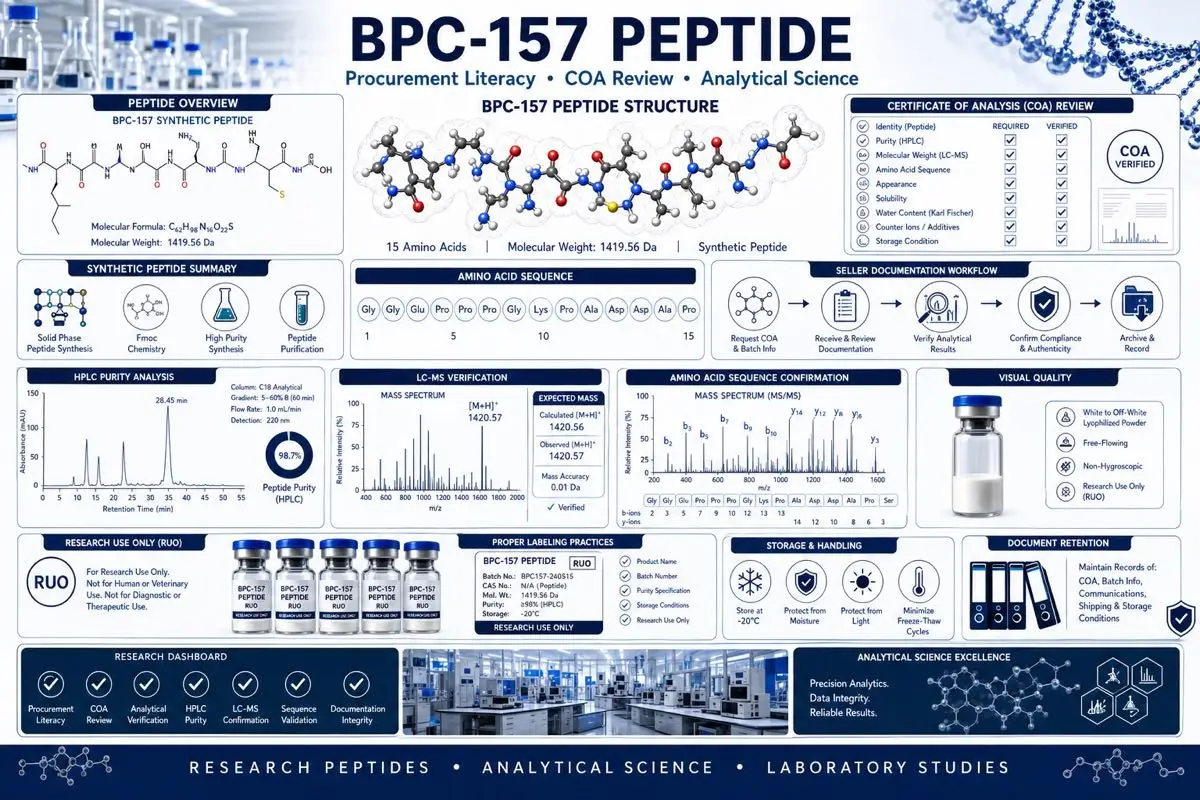
5 Checks Before You Buy BPC-157 Peptide Online for Research
Buy bpc 157 peptide for research with 5 proven checks: COA lot matching, vendor traceability, vial sizing, and FDA-aligned documentation standards.
📋 Table of Contents
For research use only, the five checks before you buy bpc 157 peptide online are: confirm research-use-only labeling, require a batch-specific third-party certificate of analysis (COA), verify seller traceability and legitimacy, match vial size to your protocol, and reject any human treatment claims. BPC-157 remains investigational, is not a component of an FDA-approved drug, and has no USP or NF drug substance monograph, so procurement should be a documentation-driven vendor review rather than a simple ecommerce checkout.
Key takeaways
- Before you buy bpc 157 peptide, screen for research-use-only labeling, batch-specific third-party testing, and seller legitimacy, because BPC-157 is not in an FDA-approved drug and remains investigational.
- PubMed reviews report only three pilot human studies, while large clinical trials, a validated dosing regimen, and completed Phase II data are still lacking.
- FDA materials warn that unsafe online products can be counterfeit, contaminated, expired, or otherwise unsafe, so a low price alone is a poor buying signal.
- The safest research purchasing workflow is to verify the COA, lot number, test method such as HPLC/MS, vial size, storage details, and business traceability before you buy bpc 157 peptide.
- If a seller makes human-treatment claims, hides documentation, or cannot explain the batch identity, skip the purchase and use a better-documented research source.
What should a careful buyer prioritize first before they buy bpc 157 peptide for research?
Documentation comes first. FDA and PubMed point to the same baseline: the compound is investigational, so the best criteria before you buy bpc 157 peptide are research-only labeling, batch-specific testing, and traceable sourcing.
Start by ignoring the most distracting signals: flashy claims, dramatic testimonials, and bargain pricing. A serious listing should clearly state that the peptide is for research use only, identify the batch, and provide a certificate of analysis that matches the lot being sold. If that basic chain is missing, the rest of the page does not matter.
This is where many buyers make the wrong first move. They compare the milligram count before they confirm identity and status. For a research peptide, identity, purity, and documentation matter before vial size, because an undocumented compound can disrupt an entire study plan.
Countrywide Peptides lists the compound used when researchers buy bpc 157 peptide as “For Research Use Only” and “Not for human use,” which is the baseline positioning serious labs should expect.
Is BPC-157 FDA-approved or legally established for human use?
No, BPC-157 is not FDA-approved. FDA and PubMed both indicate that BPC-157 lacks an approved drug status and remains investigational rather than clinically established for human use.
That distinction matters because some online listings blur the line between research material and medicine. FDA says BPC-157 is not a component of an FDA-approved drug. FDA also notes there is no USP or NF drug substance monograph for BPC-157 or its acetate form, and its evaluation weighs against placement on the 503A Bulks List.
A common misconception is that strong preclinical interest means a compound is close to routine clinical use. That is not what the published record shows here. PubMed reviews say BPC-157 has over three decades of preclinical research, yet human pharmacokinetics remain undercharacterized, no validated dosing regimen exists, and no completed Phase II clinical trial is available.
If a seller presents BPC-157 as if it were equivalent to an approved therapeutic, that is a hard stop. For that reason, every decision to buy bpc 157 peptide should start with an explicit investigational label, not a therapeutic promise.
For research purchasing, the cleaner signal is explicit investigational positioning. Review primary literature before laboratory decisions to buy bpc 157 peptide: PubMed results on BPC-157. For broader database searches, the National Center for Biotechnology Information aggregates peer-reviewed literature relevant to investigational peptides.
Key Takeaway: Is BPC-157 FDA-approved or legally established for human use? No, it is not FDA-approved and remains investigational.
💡 Key Takeaway: Is BPC-157 FDA-approved or legally established for human use?
What are the 5 checks before you buy bpc 157 peptide for research?
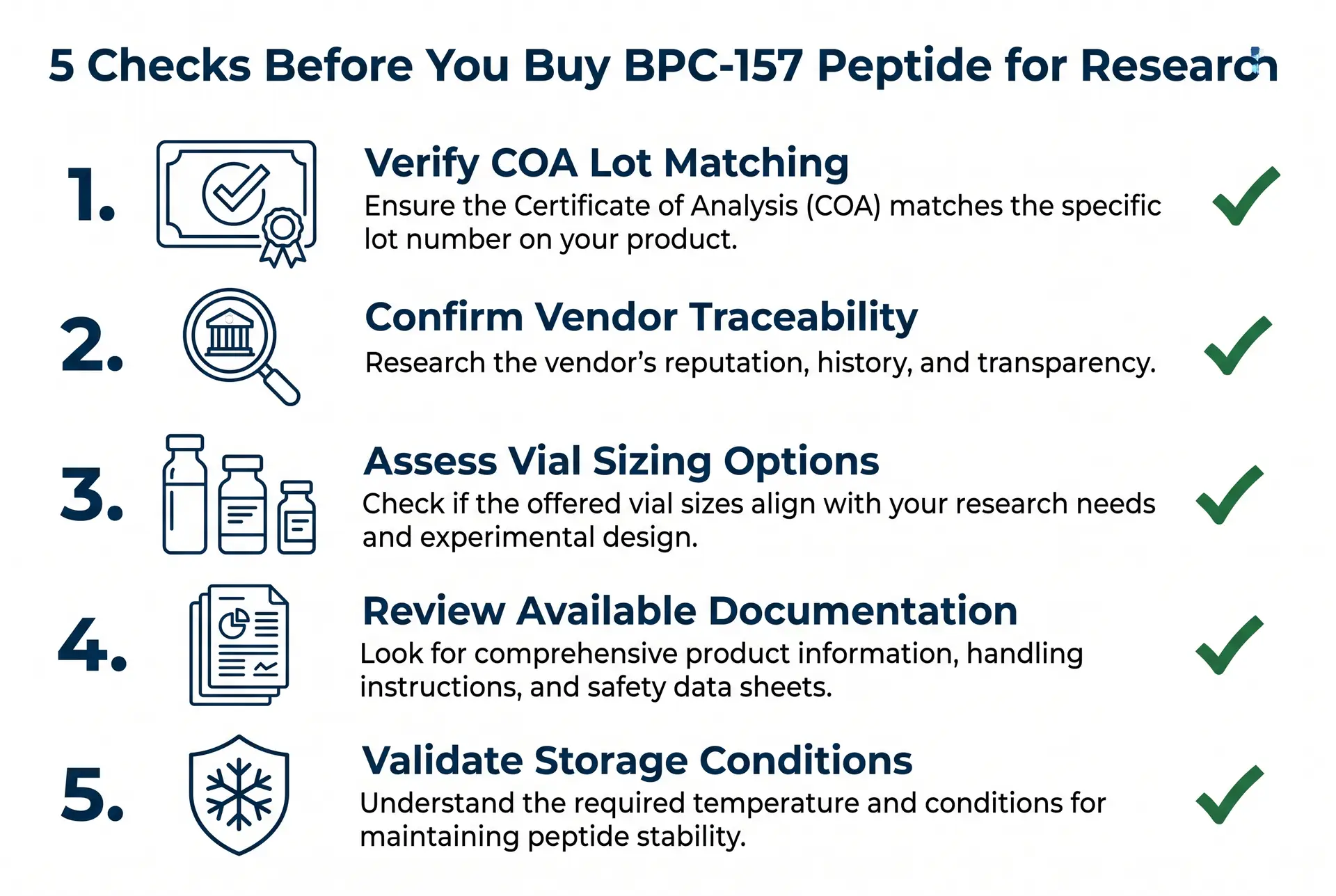
Five checks matter most. A reliable process to buy bpc 157 peptide should screen the listing, the batch, the seller, the format, and the claims before any order is placed.
Use this as a minimum screen, not an advanced audit.
| Check | What to verify |
|—|—|
| 1. Listing label | Research use only, not human use |
| 2. Batch COA | Lot number match, HPLC/MS method |
| 3. Seller traceability | US business, contact, shipping terms |
| 4. Vial size | 5 mg, 10 mg, or 20 mg fit for protocol |
| 5. Claims | No human treatment or disease claims |
These five checks capture most of the avoidable failure points when labs buy bpc 157 peptide online. They do not prove quality on their own, but they quickly separate serious research listings from questionable ones.
Use this checklist every time you buy bpc 157 peptide, even for a repeat order from a familiar vendor.
How do you verify a certificate of analysis before you buy bpc 157 peptide?
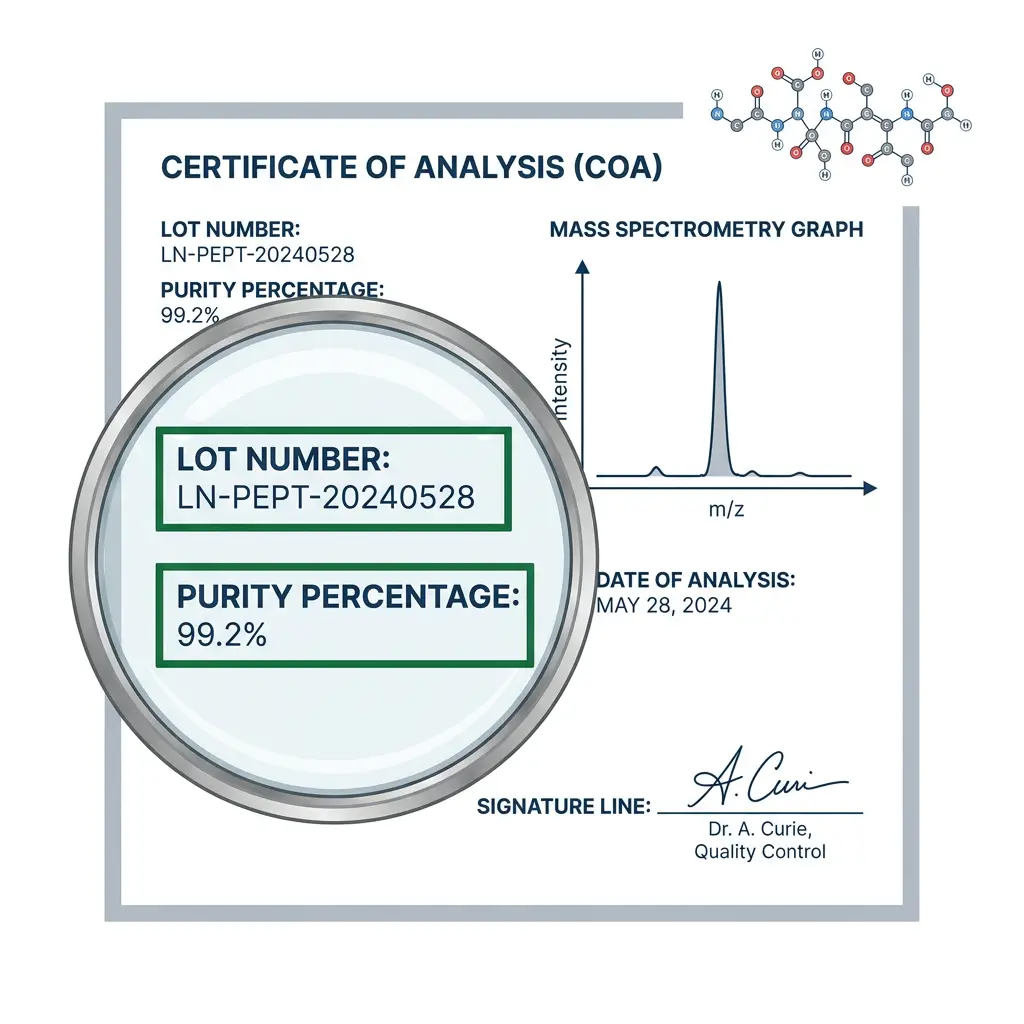
COA review should be methodical. HPLC/MS data, lot matching, and batch specificity are the fastest ways to judge whether documents used when you buy bpc 157 peptide are useful or just decorative.
Step 1 is identity matching. Compare the lot or batch number on the product listing with the COA. If the numbers do not match, ask for the current batch document before ordering.
Step 2 is method review. A strong COA should indicate how the peptide was analyzed. In this category, HPLC and mass spectrometry are common benchmarks because they speak to purity and molecular identity rather than marketing language.
Step 3 is context. A purity claim like 99%+ is meaningful only if it is tied to a real batch and test method. A generic PDF with no lot number, no date, or no testing context is weaker than a simple but traceable document.
Step 4 is recency and access. If the COA is publicly accessible and easy to review before purchase, that usually signals better process control than a seller who only sends vague screenshots after payment.
A careful researcher will not buy bpc 157 peptide if the COA cannot be traced to the current lot.
A pro tip here: do not confuse a polished label with analytical transparency. The COA is the evidence layer; the label is only the packaging layer.
Countrywide Peptides offers options to buy bpc 157 peptide in 5 mg, 10 mg, and 20 mg vials with a certificate of analysis tied to each batch.
How do you vet a seller before you buy bpc 157 peptide online?
Seller vetting should look like vendor qualification. FDA guidance and standard lab procurement logic both favor traceability, clear labeling, and business legitimacy over aggressive sales copy.
Step 1 is identity. Check whether the company shows a real U.S. business presence, contact path, shipping terms, and security practices. Anonymous storefronts are poor candidates for research procurement.
Step 2 is category fit. A research peptide supplier should sound like a research supplier. If the site reads like a consumer treatment portal, promises recovery outcomes, or uses disease claims, the positioning is off.
Step 3 is documentation discipline. Look for batch-level COAs, consistent storage language, and a chain-of-custody mindset. These signals matter more than influencer-style endorsements.
Vendor qualification is the single highest-leverage step before you buy bpc 157 peptide from a new source.
There is one nuance worth keeping straight. FDA advice on checking a state board of pharmacy license applies when a site acts as a pharmacy or sells medicines. A research peptide vendor is not the same thing. Still, the warning signs the FDA lists, such as unbelievable prices, unapproved products, and weak traceability, remain useful screening criteria.
See Peptide Suppliers USA: How to Choose a Trusted Source for a deeper vendor qualification framework.
💡 Key Takeaway: How do you vet a seller before you buy bpc 157 peptide online?
Which vial size should you choose when you buy bpc 157 peptide for research?
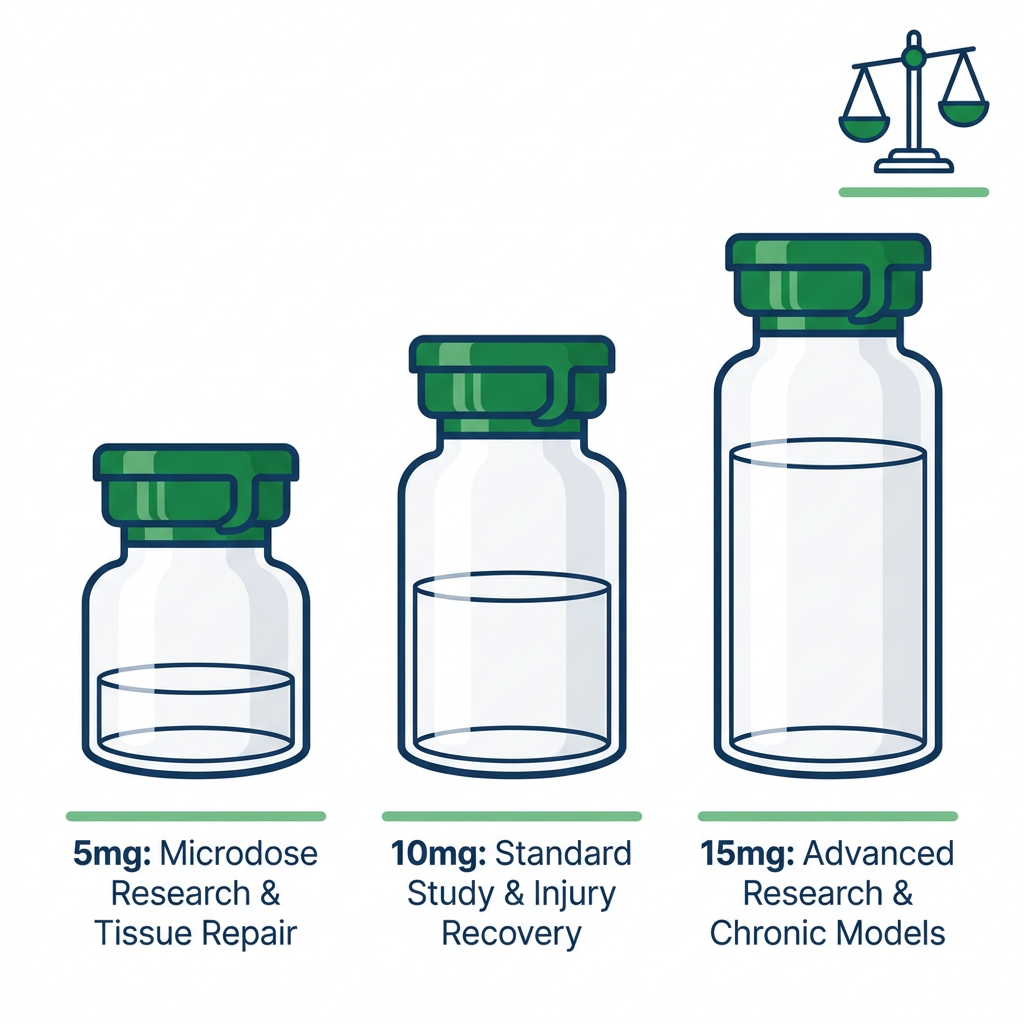
Vial size should follow the protocol design. Countrywide Peptides lists 5 mg, 10 mg, and 20 mg sizes, and the right choice depends on assay volume, handling frequency, and waste control, not hype.
Step 1 is scope. Estimate how much material the project actually needs across pilot runs, repeats, and control work. Buying a vial that is too large can increase waste if the study window is short.
Step 2 is handling burden. If the lab expects repeated access after reconstitution, small vials can reduce the risk of degradation from frequent thaw cycles. If the protocol uses large single-use aliquots, a 20 mg vial may be more efficient.
Step 3 is budget and storage. Larger vials often have a lower cost per milligram, but that advantage disappears if the material degrades before use. Storage details on the COA and product page should match your lab’s cold chain capacity.
Matching the vial size to the protocol is part of the same documentation discipline you use when you buy bpc 157 peptide at all.
When you buy bpc 157 peptide for a pilot assay, a 5 mg vial usually lets you validate the workflow before committing to larger quantities.
For planning differences between BPC-157 and GHK-Cu in vitro programs, see GHK-Cu vs BPC-157 for In Vitro Programs: Planning Differences.
How do transparent research listings differ from risky online offers when you buy bpc 157 peptide?
Transparent listings share batch data openly. Risky offers hide documentation behind payment walls, use treatment language, or lean on testimonials.
A transparent research listing will state the peptide sequence or CAS identifier, the net peptide content if relevant, the vial fill mass, the storage recommendation, and a COA link before checkout. It will also label the product as research use only, not as a supplement or therapeutic.
A risky listing may show a stock photo, a “99% pure” badge without a method, and a checkout page that asks for no lab affiliation. FDA materials warn that unsafe online products can be counterfeit, contaminated, expired, or otherwise unsafe, so a low price alone is a poor buying signal.
The difference is often visible before you buy bpc 157 peptide: transparent vendors publish batch data, while risky ones publish promises.
Before you buy bpc 157 peptide from a new storefront, compare its documentation depth against the standards described in Peptide Research Education: Evidence Boundaries & Documentation (2026).
What documentation should you request before you buy bpc 157 peptide?
Request a batch-specific COA, a lot number match, a storage statement, and a research-use-only declaration. These four items cover most procurement risk.
Request these four items every time you buy bpc 157 peptide, regardless of the seller’s reputation.
Some labs also ask for the test method, the date of analysis, and the instrument type. HPLC with UV detection and mass spectrometry are common, but the exact method matters less than the fact that it is stated and traceable.
If a seller cannot provide a COA before payment, that is a red flag. The documentation should be available for review at the listing stage, not only after you have committed to a purchase.
When you buy bpc 157 peptide, keep the COA with your laboratory notebook or electronic batch record. That creates an audit trail if any downstream assay result looks unusual.
See National Science Labs Peptides: A Researcher’s Guide for a comparison of documentation styles across vendors.
💡 Key Takeaway: What documentation should you request before you buy bpc 157 peptide?
Why do storage conditions matter when you buy bpc 157 peptide for research?
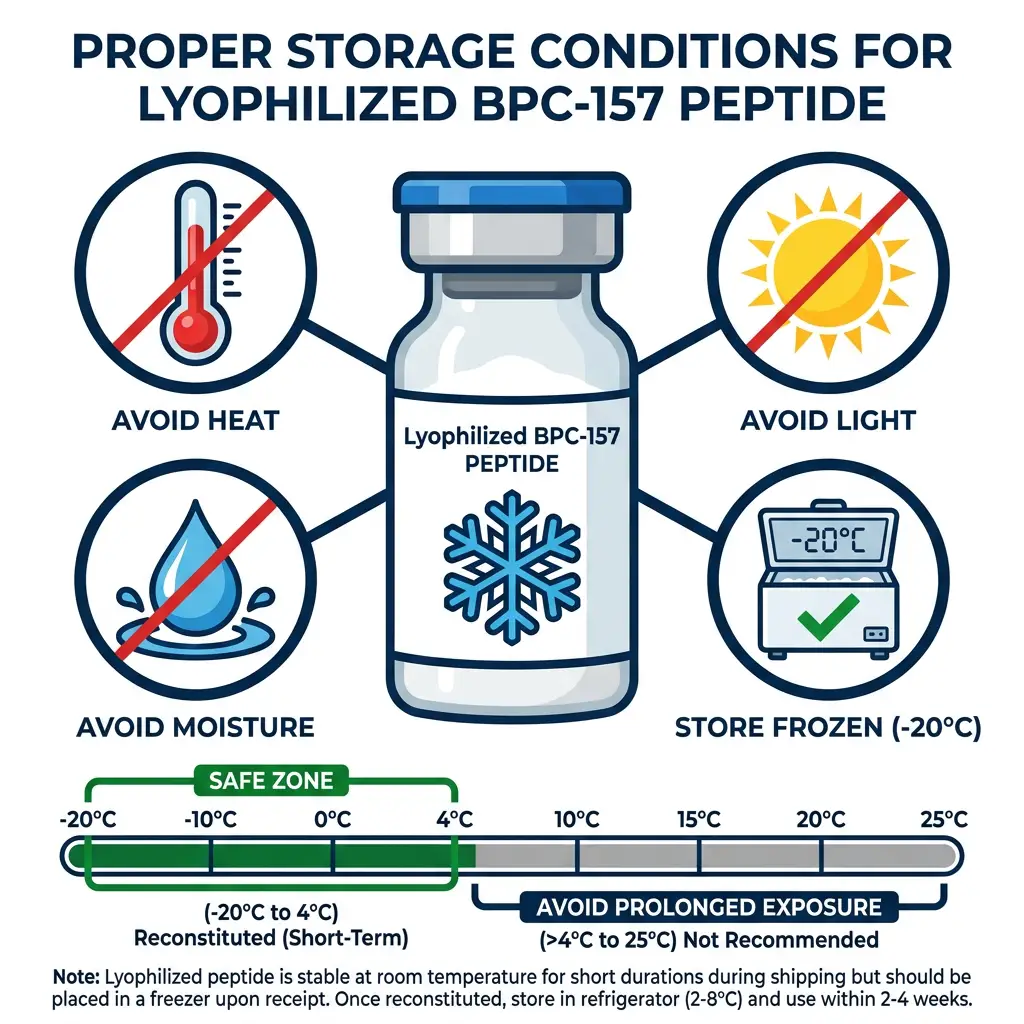
Storage conditions affect stability. Lyophilized BPC-157 vials should be kept cold and dry per the vendor’s COA, and reconstituted material has a much shorter working window.
Storage conditions are not an afterthought when you buy bpc 157 peptide for multi-week assays.
If a listing omits storage language, ask for it before ordering. Temperature excursions can degrade the peptide and invalidate assay results.
A careful buyer checks whether the seller ships with cold packs when required, and whether the packaging protects the vial from light and moisture. These details are part of the documentation layer, not separate from it.
When you buy bpc 157 peptide for long-term storage, confirm that the vial format matches your freezer capacity and that the COA includes a retest or stability note.
FAQ
What are the five checks before I buy bpc 157 peptide for research?
The five checks are research-only labeling, a batch-specific COA, seller traceability, vial size matched to protocol, and rejection of human treatment claims. Run all five every time you buy bpc 157 peptide, even for repeat orders.
Is BPC-157 FDA-approved for any use?
No. BPC-157 is not a component of an FDA-approved drug, has no USP or NF drug substance monograph, and remains investigational. Any listing that suggests otherwise should be rejected.
How can I tell if a COA is real before I buy bpc 157 peptide?
Check that the lot number on the COA matches the product listing, the test method is stated, the date is recent, and the document is available before payment. A generic PDF without lot context is weak evidence.
Why do vial sizes matter when I buy bpc 157 peptide?
Vial size affects waste, handling burden, and storage stability. A 5 mg vial suits pilot assays, while 10 mg and 20 mg vials may be more efficient for larger protocols. Match the size to your actual assay volume.
What should I do if a seller makes human-treatment claims?
Skip the purchase. Research-use-only labeling is a hard requirement. Human-treatment claims, disease promises, or recovery testimonials are disqualifying for laboratory procurement.
Ready to Take the Next Step?
Every product includes lot-specific documentation and third-party purity testing.
Explore Our Research Products →Free shipping on qualifying orders · Batch COA on request