
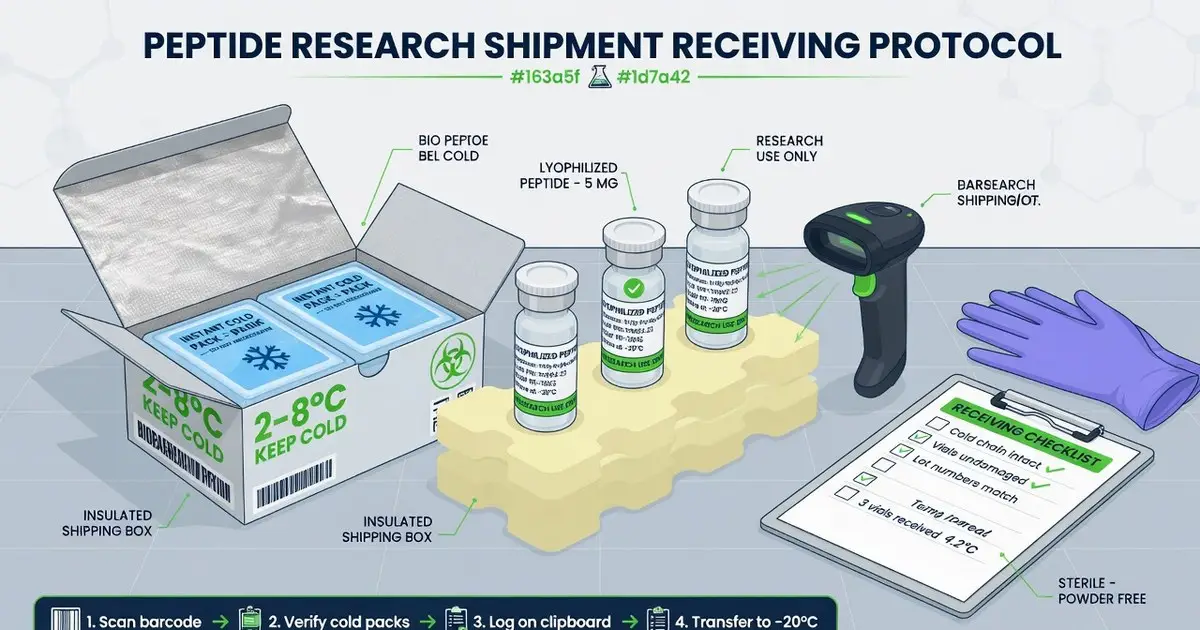
Peptide Vial Packaging for Research Receiving Teams (2026)
Peptide vial receiving standards for research labs: verify seals, lot codes, storage, and FDA container-closure guidance in 2026. Build a compliant intake SOP.
📋 Table of Contents
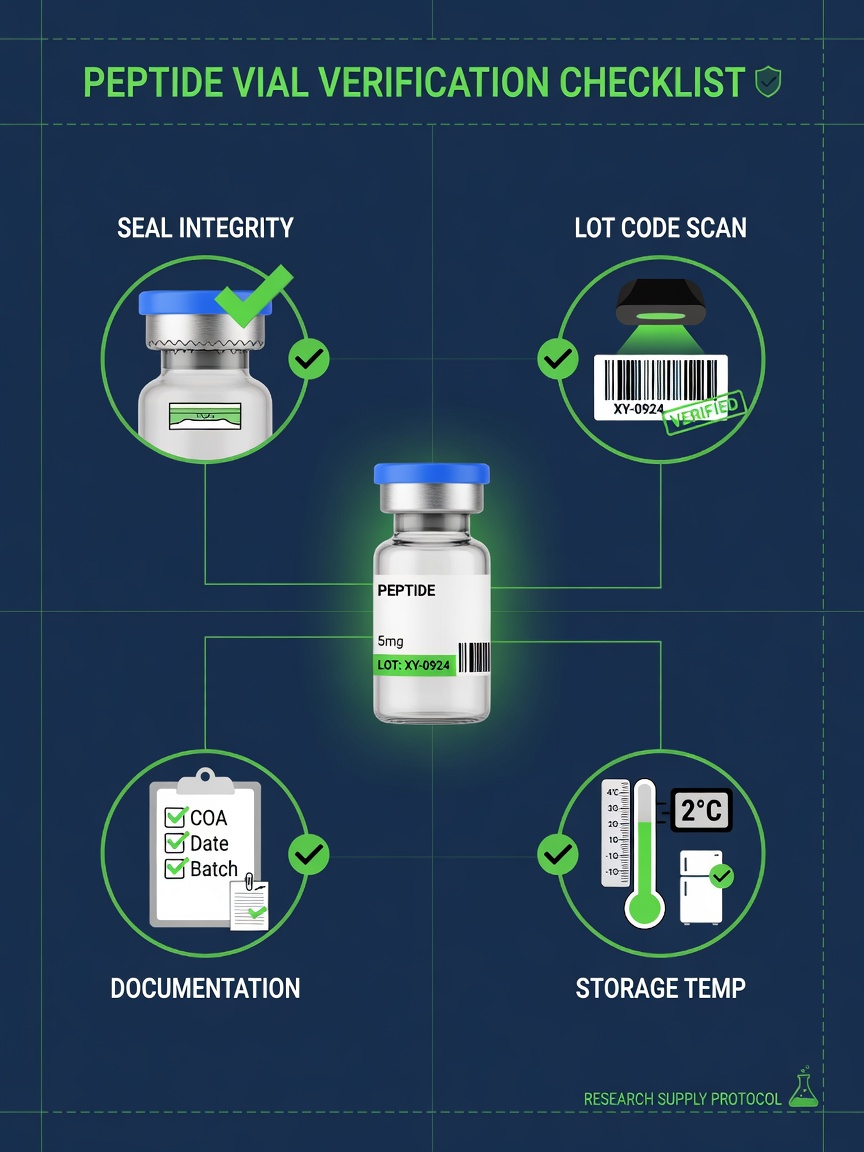
Each peptide vial entering a research laboratory in 2026 must pass four verification gates before acceptance: label text matches the purchase order and packing list, seal integrity is visually intact, lot codes are recorded, and storage conditions match the certificate of analysis. Packaging signals such as clear research-use language, durable secondary packaging, and traveling lot paperwork reduce intake delays; after intake, store each peptide vial at its validated temperature range and segregate opened from unopened lots. For research use only; not for human use.
Key takeaways
- A peptide vial must be checked against the purchase order and packing list before acceptance.
- Seal integrity and lot code recording are mandatory before first reconstitution for any peptide vial.
- FDA 21 CFR 211.94 expects container-closure systems to protect a peptide vial from deterioration or contamination.
- Closed vial filling reduces contamination risk for a peptide vial by isolating the process from operators and room environment.
- Store each peptide vial at validated temperatures, segregate opened vs unopened lots, and update inventory when a new lot is cracked.

What Should a Receiving Team Verify for Each peptide vial?
Receiving teams should verify four gates for every peptide vial before it enters active inventory. The label text must match the purchase order and packing list. Seal integrity must be visually intact, and where SOPs require, closure testing should be done before first reconstitution of any peptide vial. Lot codes must be recorded in the inventory system before a peptide vial is cracked for use.
A complete label check for a peptide vial includes three data points: the catalog number, the lot number, and the storage statement. Compare each field against the packing list first, then against the purchase order. Any mismatch in catalog number or lot number should trigger quarantine before the vial moves to active inventory.
For a lyophilized peptide vial, the label often includes a recommended storage temperature, such as -20°C, and a reconstitution note for research use. The receiving team should record the storage statement exactly as printed, because downstream stability depends on that value. If the certificate of analysis lists a different storage range than the label, resolve the discrepancy with the supplier before acceptance.
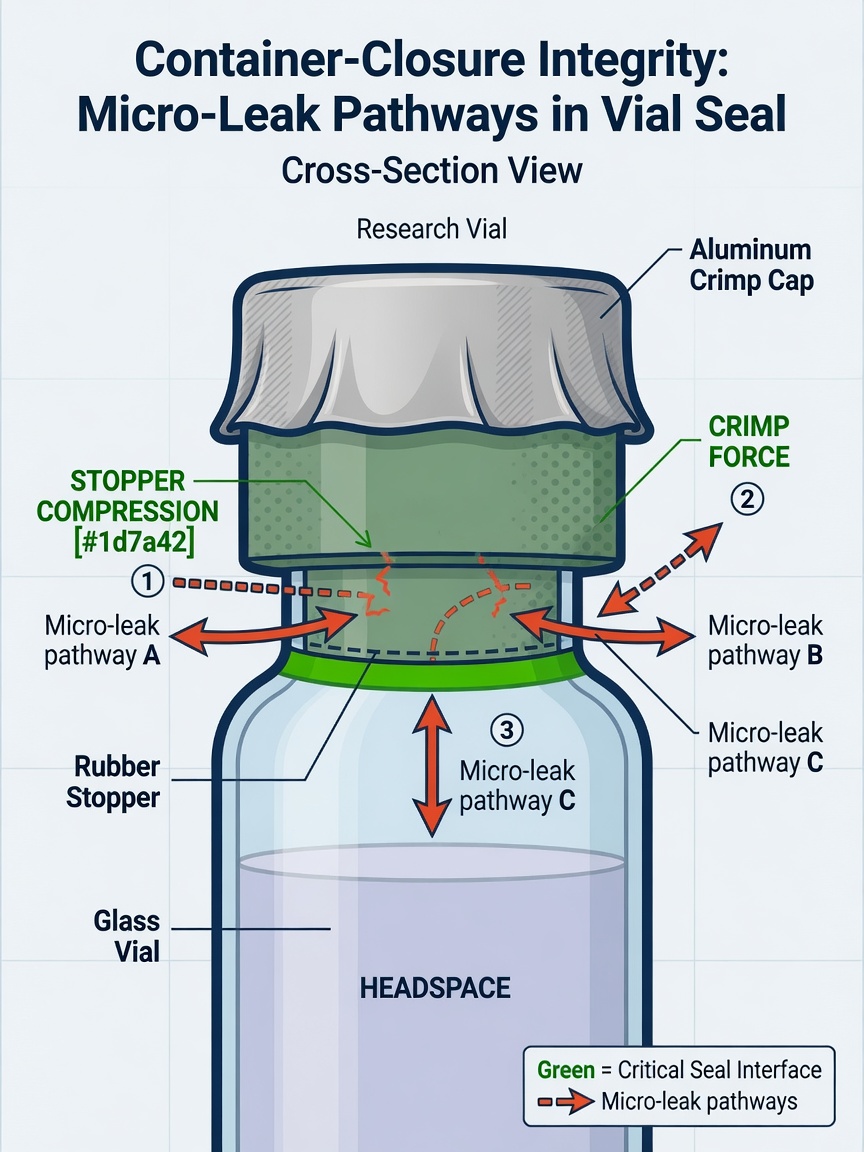
The seal check for a peptide vial should cover three structural points: the stopper, the crimp, and the glass shoulder. Look for any gap between the stopper and the glass, any displacement of the crimp, or any visible cracks along the shoulder. A peptide vial with a loose crimp may still pass a visual carton check, so open the secondary packaging before signing the receiving log.
Where the receiving SOP requires closure testing, use the method specified in the protocol. Common research laboratory methods include dye ingress testing or vacuum decay testing, but the chosen method should be documented. A peptide vial that fails closure testing should be quarantined and photographed, not returned to the same storage unit as accepted lots.

Why Does Container-Closure Integrity Matter for a peptide vial?
FDA guidance on current good manufacturing practice makes the expectation clear: container-closure systems must protect contents against foreseeable external factors during storage and use that can cause deterioration or contamination. 21 CFR 211.94 states the same principle in regulatory language. For research settings, the translation is direct—if a peptide vial and its seal cannot reliably protect the material, packaging is not doing its job.
Container-closure integrity is not only a manufacturing detail. It determines whether moisture, oxygen, or light can reach the lyophilized material inside a peptide vial after shipping and during storage. A well-sealed peptide vial preserves the research material’s stated characteristics, while a failed closure may introduce variables that invalidate experimental data.
Receiving teams should treat closure integrity as a release criterion, not a cosmetic preference. A peptide vial with a loose crimp or a displaced stopper should be quarantined immediately, even if the outer carton appears undamaged. That step protects the rest of the active inventory from a compromised lot.
💡 Key Takeaway: Why Does Container-Closure Integrity Matter for a peptide vial?
How Does Closed Vial Filling Influence peptide vial Protection?
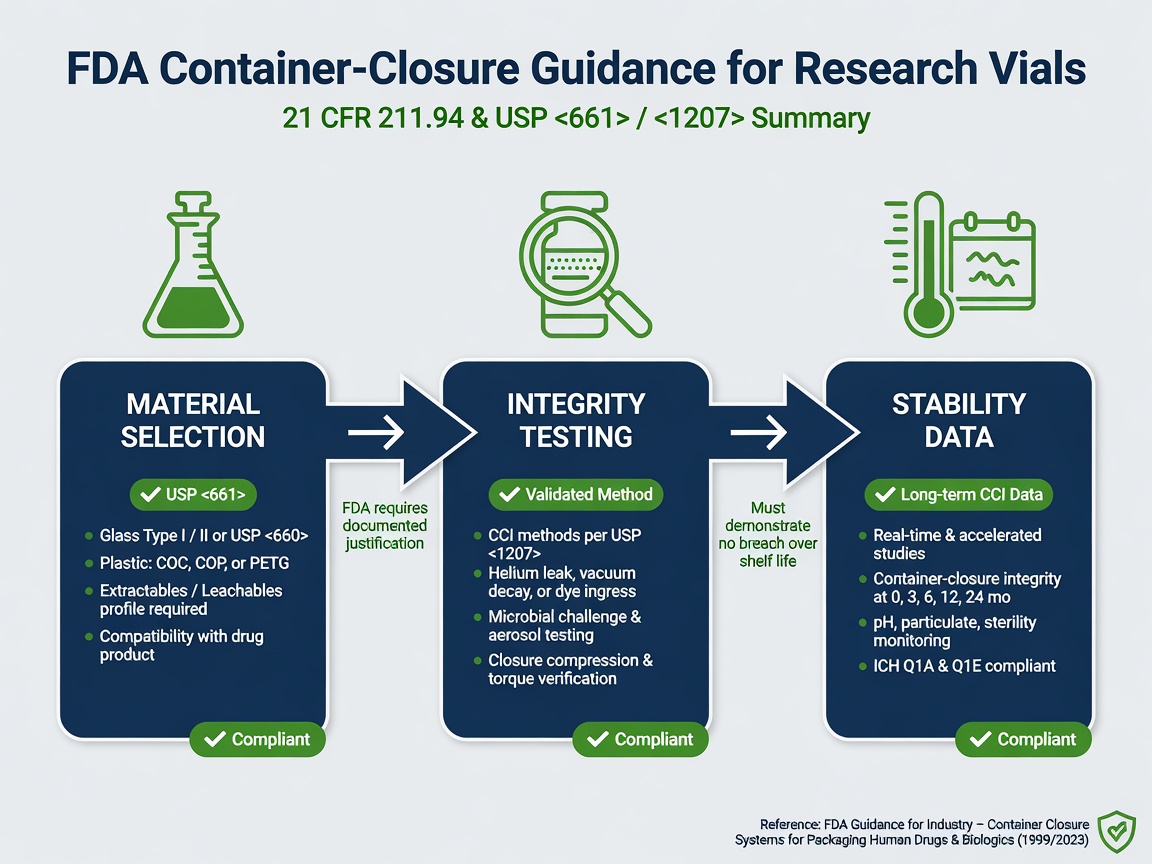
FDA also notes that closed vial filling can reduce contamination risk by isolating the process from operators and the surrounding room environment. That is not only a manufacturing detail. It signals that peptide handling quality begins before vials are capped. Good packaging performance is built into filling, stoppering, and sealing rather than added at the end.
For a research peptide vial, closed filling means fewer contact points for adventitious agents and less chance that environmental particles settle inside the container. This upstream control supports the downstream expectation that every peptide vial arrives with the closure integrity intact and the contents unchanged.
Receiving teams do not need to replicate filling controls, but they should understand why those controls matter. A peptide vial produced under closed filling conditions is less likely to carry particulate or microbial contamination from the manufacturing room. That reduces the burden on intake inspection and supports faster acceptance.

Which Packaging Signals Should Laboratories Prioritize at Intake?
Clear research-use language, durable secondary packaging, and paperwork that travels with the lot reduce intake delays. A peptide vial should arrive with documentation that links the lot number, storage conditions, and research-use statement to the specific vial in hand.
Durable secondary packaging matters because a peptide vial may be shipped alongside other temperature-sensitive materials. Outer cartons should resist compression and moisture, and the inner tray should prevent vial movement. When exceptions occur, photograph the outer carton before discarding it if your SOP requires that record.
For supplier evaluation, see Peptide Suppliers USA: How to Choose a Trusted Source. A peptide vial intake record should never imply therapeutic use. For broader documentation boundaries, see Peptide Research Education: Evidence Boundaries & Documentation (2026). That resource explains how to keep research-use language and evidence claims separated in multi-site studies.
How Should Laboratories Store a peptide vial After Intake?
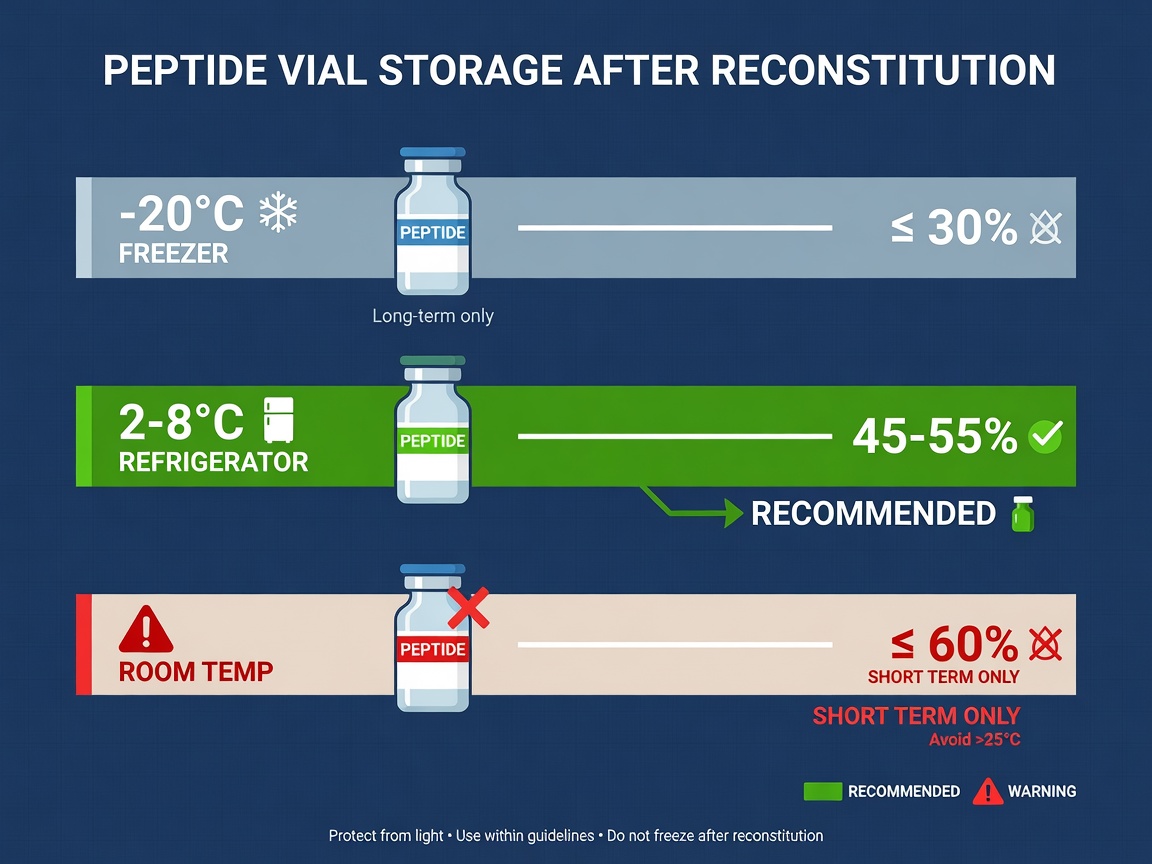
Follow validated temperature ranges, segregate opened vs unopened lots, and update inventory systems when a new lot is cracked. A peptide vial should be stored according to the lyophilized material’s validated stability data, not generic assumptions.
Opened and unopened peptide vial lots should be kept in separate labeled containers or shelves. For example, a -20°C freezer may hold unopened lyophilized peptide vial stock, while a separate -20°C drawer holds vials that have been reconstituted for immediate research use. Segregation prevents accidental cross-contamination and simplifies audit trails.
Update the inventory system the moment a peptide vial is cracked for reconstitution. Record the date, the operator, and the new storage condition. This timestamp links each peptide vial to its lifecycle stage and supports downstream data integrity. A peptide vial that has been reconstituted should not be returned to the same unopened stock location.

💡 Key Takeaway: How Should Laboratories Store a peptide vial After Intake?
What Does FDA Guidance Say About Container-Closure Systems?
FDA guidance for industry on container closure systems for packaging human drugs and biologics states that a container closure system should provide the dosage form with adequate protection from factors that can cause a deterioration in the quality of that dosage form over its shelf life. 21 CFR 211.94 codifies this expectation. For research teams, the same principle applies: the container must protect the research material from moisture, oxygen, light, and microbial contamination.
The guidance also describes closed vial filling as a control that reduces contamination risk by isolating the process from operators and the room environment. This upstream control supports the downstream expectation that every research vial arrives with closure integrity intact and contents unchanged. Receiving teams should treat closure integrity as a release criterion.
For the full regulatory text, see FDA Container Closure Systems for Packaging Human Drugs and Biologics.
How Can Supplier Coordination Improve Peptide Vial Documentation?
Supplier coordination improves documentation by aligning on lot-level paperwork before shipment. Request that each lot include a certificate of analysis, a research-use statement, and a packing list that references the exact lot number. Clear documentation reduces intake delays and supports traceability for every research vial in the receiving workflow.
Regular communication with suppliers helps resolve label discrepancies before a lot ships. For example, if the certificate of analysis lists a different storage range than the label, the supplier should correct or confirm the value before acceptance. This step prevents a quarantine decision at the dock.
For a supplier review resource, see Nationwide Peptides Reviews | Countrywide Peptides. A well-documented lot reduces the burden on intake inspection and supports faster acceptance.
What Are the Core Packaging Standards for a Research Vial?
Core packaging standards include clear research-use language, durable secondary packaging, and a tamper-evident closure. The outer carton should resist compression and moisture, while the inner tray should prevent movement during transit. These standards protect the research material from external factors that can cause deterioration or contamination.
For quality standards aligned with these packaging expectations, see Countrywide Peptides: 5 Proven Quality Standards for Labs. A research vial should arrive with documentation that links the lot number, storage conditions, and research-use statement to the specific vial in hand.
💡 Key Takeaway: What Are the Core Packaging Standards for a Research Vial?
How Can Research Teams Build an Intake Checklist for a peptide vial?
Research teams can build an intake checklist by sequencing the four verification gates into a repeatable SOP. Start with label verification: compare catalog number, lot number, and storage statement against the packing list and purchase order. Next, inspect the seal and crimp for gaps, displacement, or cracks. Then record the lot code in the inventory system. Finally, confirm that the storage conditions match the certificate of analysis.
A written checklist reduces ambiguity and ensures that no research vial is accepted without all four gates passing. Use a paper or digital form that timestamps each step. Photograph any exceptions before discarding outer cartons when the SOP requires that record. A vial that fails any gate should be quarantined and not returned to the active inventory.
What Documentation Should Travel with a Lot?
Each lot should travel with three documents: a certificate of analysis, a research-use statement, and a packing list that references the exact lot number. The certificate of analysis must list the storage range, purity data, and any reconstitution notes for the research material. The research-use statement must be clear and not imply therapeutic use. The packing list should match the purchase order line items exactly.
For documentation guidance across multi-site studies, see National Science Labs Peptides: A Researcher’s Guide. A complete document set reduces intake delays and supports traceability from dock to bench.
Why Should Laboratories Photograph Packaging Exceptions?
Photographing packaging exceptions creates a timestamped record for supplier disputes and internal audits. If a vial arrives with a loose crimp or a displaced stopper, photograph the vial and the outer carton before discarding any packaging. This record supports quarantine decisions and prevents the same compromised lot from re-entering active inventory.
A photograph also documents temperature indicator status if the shipment included a cold chain monitor. When the SOP requires it, save the image to the inventory system with the lot number and date. This step strengthens the receiving team’s audit trail without adding significant time.
💡 Key Takeaway: Why Should Laboratories Photograph Packaging Exceptions?
How Do External Factors Deteriorate a Research Vial?
Moisture, oxygen, light, and temperature excursions can deteriorate a lyophilized research vial. Moisture can cause hydrolysis of the peptide material, while oxygen can promote oxidation. Light exposure may degrade light-sensitive sequences. Temperature excursions outside the validated range can accelerate all of these pathways.
Durable secondary packaging and a well-sealed container closure system mitigate these risks. Receiving teams should verify that the outer carton resisted compression and that the inner tray prevented movement. Any sign of moisture ingress or temperature abuse should trigger quarantine.
How Does Lyophilization Affect Storage of a peptide vial?
Lyophilization removes water from the peptide material, which improves stability at recommended storage temperatures. A lyophilized peptide vial typically requires storage at -20°C or lower, depending on the certificate of analysis. The absence of water reduces the rate of hydrolysis and oxidation, but the vial still needs a tight seal to prevent moisture reabsorption.
For additional background on peptide stability and lyophilization, see PubMed search for peptide lyophilization stability. After reconstitution, the storage window shortens significantly, so opened vials should be segregated and used according to the research protocol.
FAQ
What should a receiving team check first on a peptide vial?
The first check is label verification: compare the catalog number, lot number, and storage statement on the peptide vial against the packing list and purchase order. Any mismatch triggers quarantine before the vial enters active inventory.
Why is seal integrity critical for a peptide vial?
Seal integrity prevents moisture, oxygen, and light from reaching the lyophilized material inside the peptide vial. A failed closure may introduce variables that invalidate experimental data, so any loose crimp or displaced stopper requires quarantine.
How should a laboratory store an opened peptide vial?
An opened peptide vial should be stored separately from unopened lots, at the validated temperature for the reconstituted material, and its inventory record should be updated with the reconstitution date and operator. Never return an opened vial to the unopened stock location.
What documentation should travel with a peptide vial lot?
Each peptide vial lot should travel with a certificate of analysis, a research-use statement, and a packing list that references the exact lot number. The certificate of analysis must list the storage range, purity data, and any reconstitution notes.
What does FDA 21 CFR 211.94 require for a peptide vial container closure?
FDA 21 CFR 211.94 requires that container-closure systems protect the contents from foreseeable external factors during storage and use that can cause deterioration or contamination. For a peptide vial, this means a tight seal, durable secondary packaging, and closure integrity verified at intake.
Ready to Take the Next Step?
Every product includes lot-specific documentation and third-party purity testing.
Explore Our Research Products →Free shipping on qualifying orders · Batch COA on request