
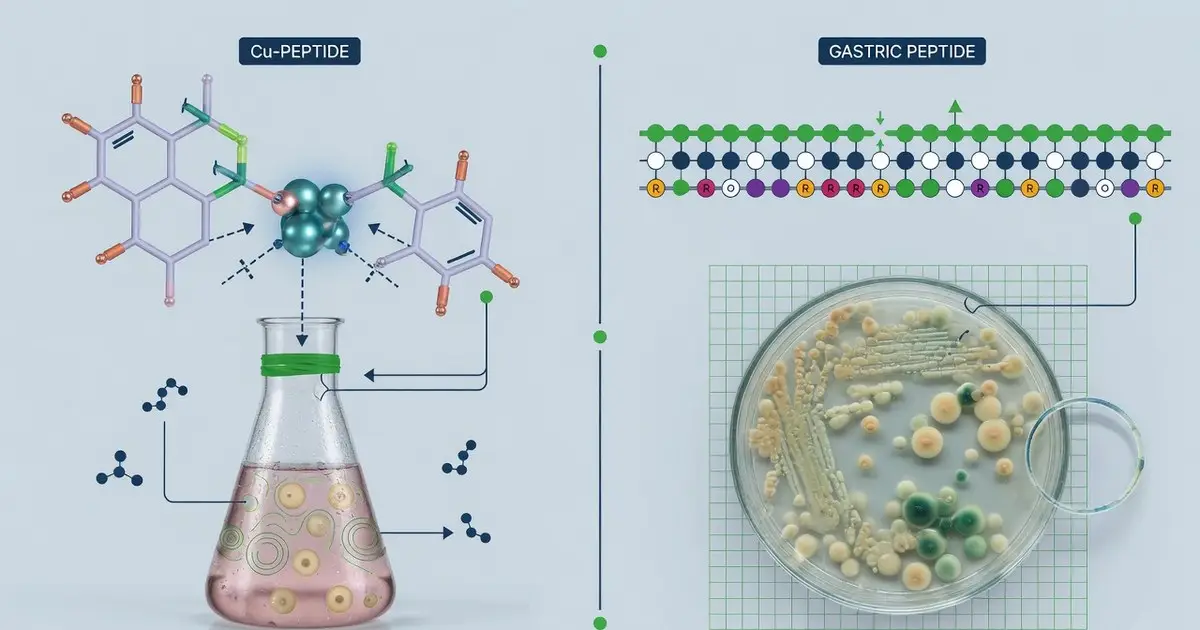
GHK-Cu vs BPC-157 for In Vitro Programs: Planning Differences
ghk cu vs bpc 157 research planning guide: 5 essential differences in pathway aims, controls, assay models, and COA steps for trusted lab teams.
📋 Table of Contents
Planning ghk cu vs bpc 157 research differs primarily in the assay question: GHK-Cu in vitro programs usually prioritize copper-peptide interaction and matrix-oriented models, while BPC-157 programs more often focus on cellular signaling and tissue-model assay development. Researchers should define pathway aims before ordering and never treat the two catalog SKUs as interchangeable without method validation. All information below is for research use only.
Key takeaways
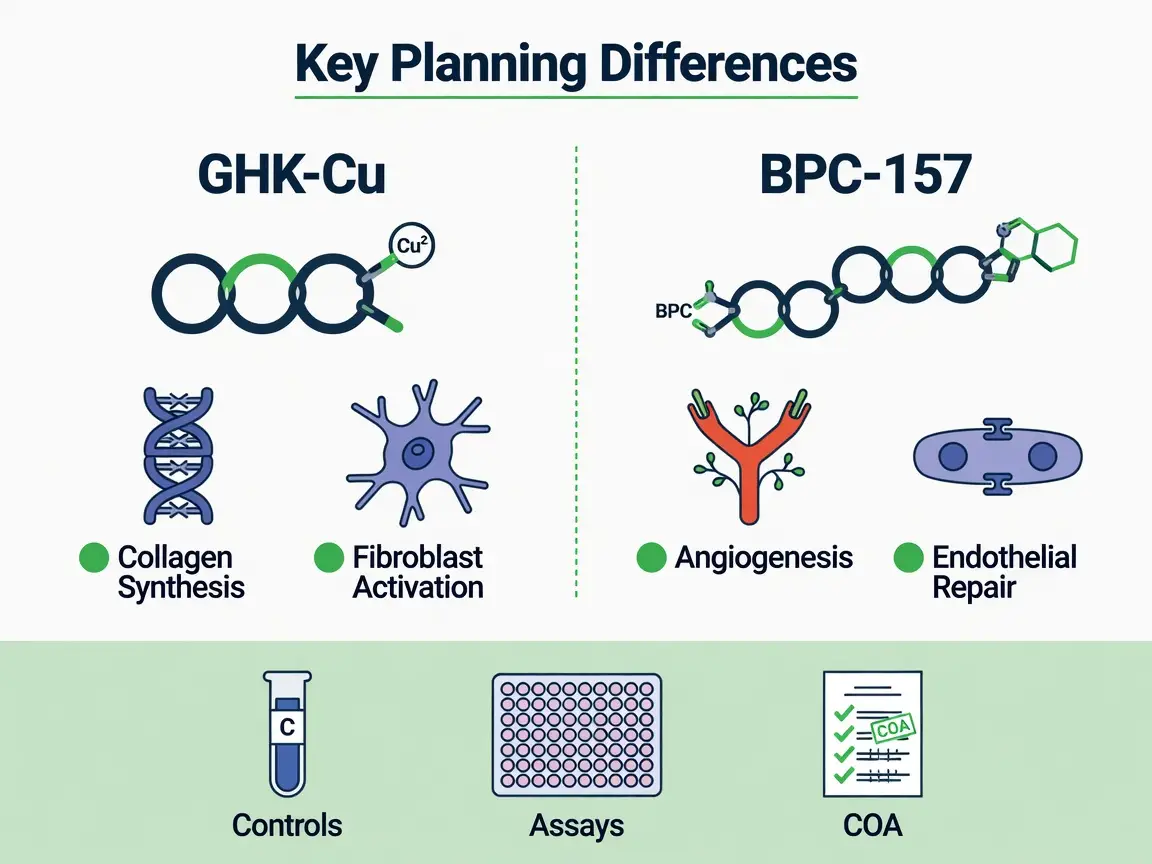
- Define pathway aims before ordering any GHK-Cu or BPC-157 input; this is the first planning gate.
- GHK-Cu work typically links to copper-peptide interaction and matrix-oriented in vitro models; BPC-157 programs more often center on cellular signaling and tissue-model assay development.
- Shared controls—lot logging, pilot plates, dedicated tools, research-only labeling—apply equally to both SKUs.
- File COA and lot documents before first use, and select the SKU that matches the assay question.
- Do not treat GHK-Cu and BPC-157 as interchangeable without method validation.
What Are the Core Planning Differences in ghk cu vs bpc 157 research?
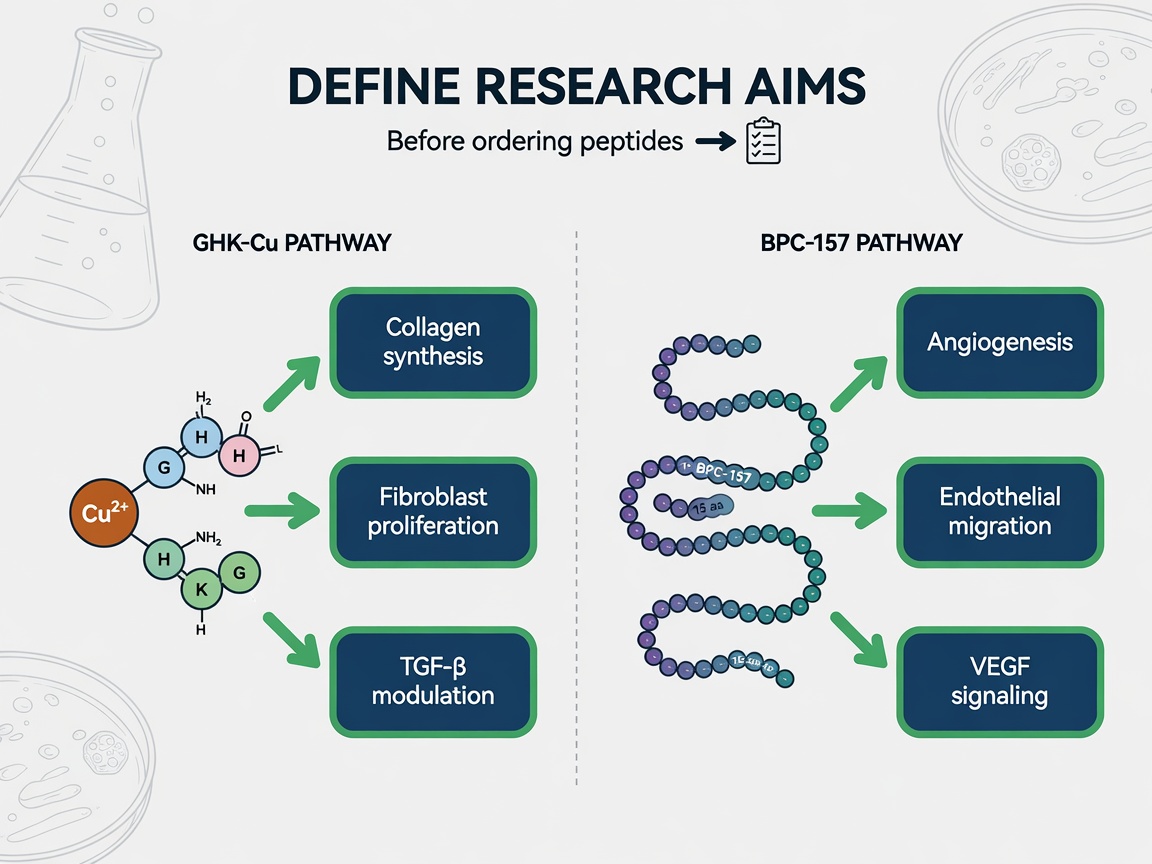
When a lab compares ghk cu vs bpc 157 research, the first planning difference is the assay question. GHK-Cu work often relates to copper-peptide interaction and matrix-oriented in vitro models, so protocols may require matrix substrates, copper-binding buffers, or cell adhesion readouts. BPC-157 programs more often center on cellular signaling and tissue-model assay development, which may call for signaling-pathway reporters, migration or proliferation endpoints, and tissue-construct formats. Keeping those aims explicit in the protocol prevents cross-contamination of experimental logic.
Another core difference in ghk cu vs bpc 157 research is the role of the peptide itself. GHK-Cu is frequently studied as a copper-peptide complex, meaning the presence and stability of copper coordination can influence assay design. BPC-157 is generally approached as a synthetic peptide signal modulator in in vitro systems, so assay development may emphasize dose-response curves and pathway inhibition or activation readouts. Labs should document which role each SKU plays before any incubation step.
These distinctions do not make one peptide better than the other. They make the planning sequence different for ghk cu vs bpc 157 research. The correct order is to state the biological question, select the model, then choose the peptide that matches that model—not the reverse. Countrywide Peptides frames both as laboratory catalog inputs only, and the same framing should appear in every internal protocol.
Planning Gate Summary
A five-gate sequence helps teams avoid ordering the wrong SKU. First, write the biological question. Second, choose the assay model. Third, select the peptide that matches the model. Fourth, define positive and negative controls. Fifth, file the COA and lot number before first use. Each gate must be completed before the next one starts.
This sequence is the same for both peptides, but the entries inside each gate differ. A matrix-oriented GHK-Cu gate may require a copper-binding buffer note. A signaling-oriented BPC-157 gate may require a reporter construct note. Keeping the gate structure consistent while allowing field-level variation is the practical core of the planning difference.
How Should Researchers Define Pathway Aims Before Ordering ghk cu vs bpc 157 research?
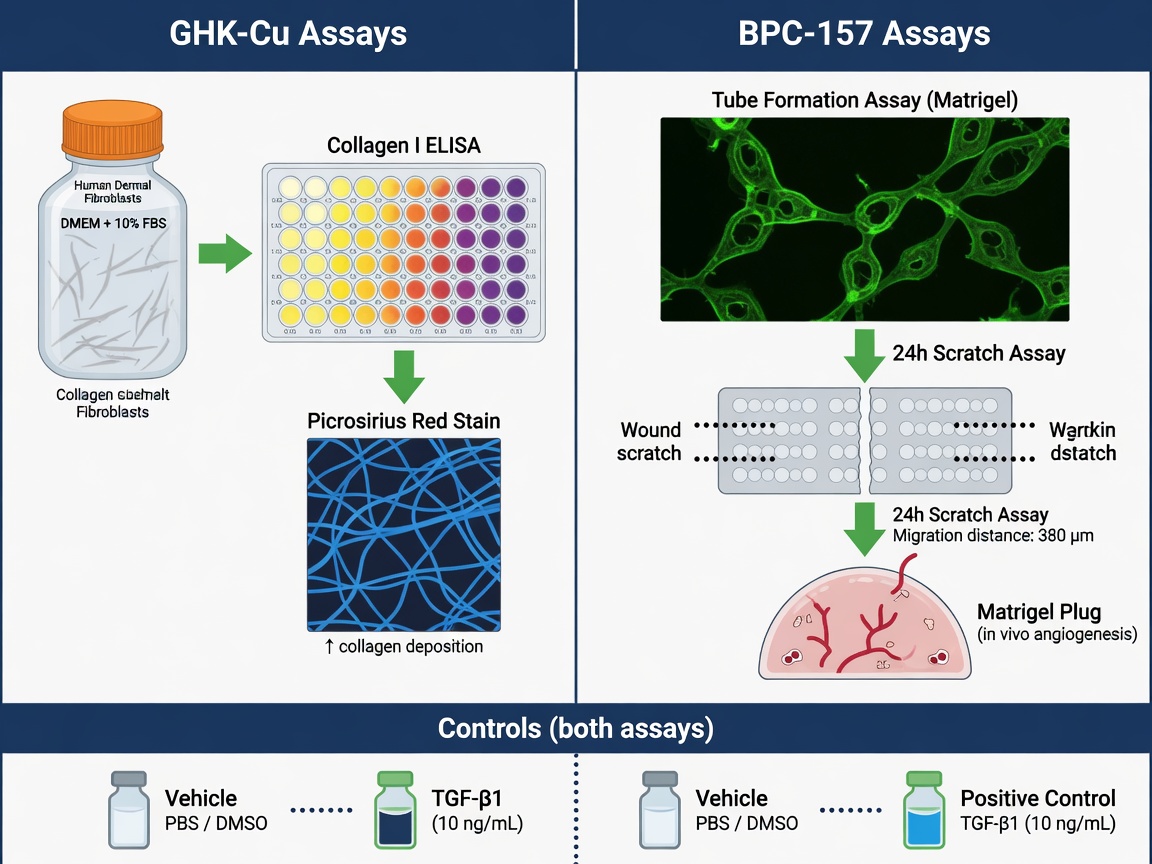
Defining pathway aims before ordering is the first actionable step in ghk cu vs bpc 157 research. A GHK-Cu protocol might target extracellular matrix remodeling, collagen-related readouts, or copper-dependent enzyme activity in cell culture. A BPC-157 protocol might target angiogenic signaling, growth-factor pathway modulation, or tissue-repair gene expression in an in vitro model. Writing these aims as explicit hypotheses reduces the risk of ordering the wrong SKU.
For ghk cu vs bpc 157 research, labs should also define negative and positive controls at the aim-setting stage. If the aim is copper-peptide interaction, include a copper-free control or a matrix-only condition. If the aim is cellular signaling, include a signaling inhibitor or a vehicle control. These controls are not interchangeable between the two peptides, which is why method validation must follow SKU selection.
Documentation of pathway aims should be attached to the lot log in ghk cu vs bpc 157 research. When a team files COA and lot documents before first use, the aim statement can sit alongside those records. This practice makes future audits easier and keeps the research-use-only boundary explicit. Teams that skip this step often find later that the selected readout cannot be traced to a defined pathway assumption.
Aim Examples by Peptide
For GHK-Cu in vitro programs, common aims include collagen-related output, copper-dependent enzyme activity, or matrix adhesion endpoints. For BPC-157 in vitro programs, common aims include angiogenic signaling readouts, growth-factor pathway modulation, or tissue-repair gene expression. These examples are not exhaustive, but they show why the SKU selection follows the aim rather than the reverse.
A written aim statement should be one sentence and should name the peptide, the model, and the readout. For example, a GHK-Cu aim might state that the study measures copper-dependent matrix deposition in a collagen-coated well over 72 hours. A BPC-157 aim might state that the study measures phosphorylation of a signaling reporter in a monolayer culture over 6 hours. That level of specificity prevents later confusion.
💡 Key Takeaway: How Should Researchers Define Pathway Aims Before Ordering ghk cu vs bpc 157 research?
Which Shared Lab Controls Apply to ghk cu vs bpc 157 research?
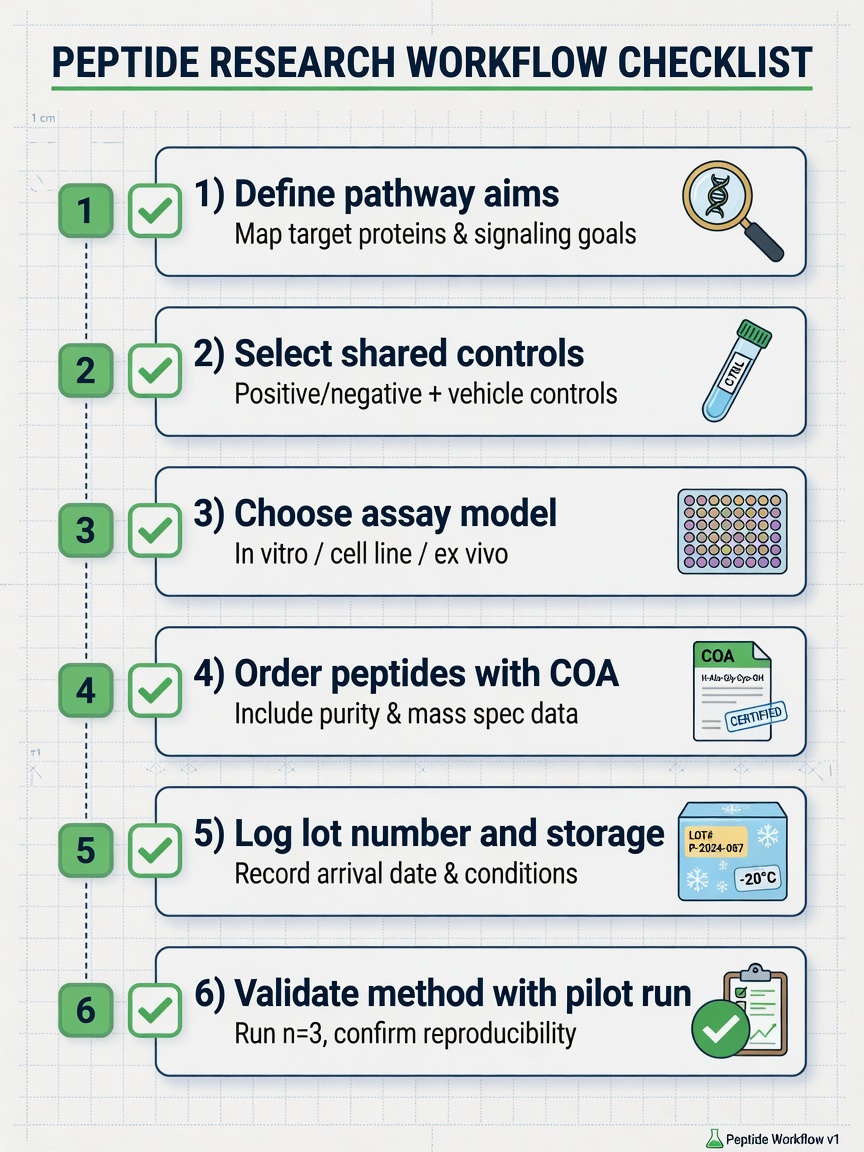
Shared lab controls apply equally to ghk cu vs bpc 157 research. Lot logging is mandatory for both. Pilot plates should be run before full assay batches. Dedicated tools—such as pipette tips, tubes, and storage boxes—prevent cross-contamination between the two peptides. Research-only labeling must appear on every container, datasheet, and notebook entry.
These controls do not mean the SKUs are interchangeable. In fact, the shared-control requirement in ghk cu vs bpc 157 research highlights that both peptides demand the same rigor even though their assay targets differ. A lab cannot skip lot logging for one peptide and keep it for the other; both need identical documentation standards.
Pilot plates are especially important when a team runs ghk cu vs bpc 157 research side by side. Because GHK-Cu work often involves copper-peptide interaction and matrix-oriented models, the plate surface and matrix coating may affect results. Because BPC-157 programs often center on cellular signaling and tissue-model assays, cell density and passage number may have larger effects. Running pilot plates for each SKU under its own conditions is part of responsible planning.
Control Log Example
A control log for either peptide should include the lot number, the COA file path, the date of first use, and the aliquot count. It should also note which dedicated tools were assigned to that peptide. This log can be a shared template, but the entries must be peptide-specific. A shared template with blank fields is safer than two separate logs that drift apart.
Teams should also record whether the pilot plate included the planned matrix coating for GHK-Cu or the planned cell density for BPC-157. That note links the control to the assay model. Without it, a later reviewer cannot tell whether a failed plate was a control problem or a model mismatch.
How Do Assay Models Differ for ghk cu vs bpc 157 research?
Assay model selection is a major branch point in ghk cu vs bpc 157 research. GHK-Cu protocols often use matrix-coated wells, collagen gels, or copper-supplemented media to maintain the peptide’s coordination state. BPC-157 protocols may use standard monolayer cultures, co-culture systems, or tissue-construct models where signaling endpoints are more accessible. Choosing the wrong model can obscure the peptide’s intended readout.
For ghk cu vs bpc 157 research, the model also determines the time course. Matrix-oriented assays may require longer incubation windows for deposition or remodeling readouts. Signaling-oriented assays may require shorter windows for phosphorylation or reporter activation. These time-course decisions should be written into the protocol before the first pilot plate.
A comparison table helps teams visualize the planning differences for ghk cu vs bpc 157 research.
| Planning Dimension | GHK-Cu In Vitro Programs | BPC-157 In Vitro Programs |
|—|—|—|
| Typical research focus | Copper-peptide interaction and matrix-oriented models | Cellular signaling and tissue-model assay development |
| Common assay formats | Matrix-coated plates, collagen gels, copper-supplemented media | Monolayer cultures, co-culture systems, tissue-construct models |
| Readout examples | Collagen-related output, copper-dependent enzyme activity, adhesion endpoints | Signaling-pathway reporters, migration or proliferation endpoints, gene expression |
| Time course | Often longer for deposition or remodeling readouts | Often shorter for phosphorylation or reporter activation |
| Key control | Copper-free or matrix-only condition | Signaling inhibitor or vehicle control |
Time-Course and Plate Surface Considerations
Matrix-oriented GHK-Cu assays may require plates coated with collagen or another substrate before peptide addition. The coating itself can bind copper, so a copper-free control helps separate peptide-copper effects from matrix effects. BPC-157 signaling assays may use standard tissue-culture plates, but cell density can change reporter baseline. Running a density titration before the full batch reduces that risk.
Both plate surface and time course should appear in the protocol header. A protocol that says only ‘add peptide and measure’ is insufficient for either peptide. The header should name the plate type, the coating or surface treatment, the seeding density, and the readout window. That level of detail is what makes a planning difference actionable.
What Documentation and Ordering Notes Matter for ghk cu vs bpc 157 research?
Documentation and ordering notes are not optional in ghk cu vs bpc 157 research. Before a SKU is selected, the team should record the assay question, the intended model, and the positive and negative controls. This prevents a situation where a researcher orders one peptide and later tries to force it into the other peptide’s assay logic.
When a lab orders either peptide for ghk cu vs bpc 157 research, the first note should be the COA and lot file. Countrywide Peptides provides lot-specific documentation that labs can file before first use. The Countrywide Peptides: 5 Proven Quality Standards for Labs guide explains why COA checks matter for research consistency. Ordering without a documented COA path creates an audit gap.
Another ordering note is storage condition documentation. GHK-Cu and BPC-157 may require different handling parameters depending on the vendor’s COA. Teams should record storage temperature, reconstitution buffer, and aliquot plan in the same lot log. This is not a human-use instruction; it is an in vitro handling note for laboratory workflows.
Ordering Note Checklist
- Assay question written in one sentence
- Assay model selected and named
- Positive control defined
- Negative control defined
- COA file path recorded
- Lot number recorded
- Storage condition noted
- Reconstitution buffer noted
- Aliquot plan noted
- Research-only label confirmed
This checklist sits before the first incubation step. It does not replace the pilot plate, but it makes the pilot plate interpretable. If a later data point cannot be traced to a COA or a control, the ordering note reveals the gap.
💡 Key Takeaway: What Documentation and Ordering Notes Matter for ghk cu vs bpc 157 research?
Why Do Lot Logging and COA Filing Matter in ghk cu vs bpc 157 research?
Lot logging and COA filing are mandatory in ghk cu vs bpc 157 research. Each peptide lot can vary in purity percentage, residual solvents, or peptide content, and those values sit on the COA. Without a filed COA, a lab cannot compare results across two lots or troubleshoot a failed pilot plate.
For ghk cu vs bpc 157 research, a missing COA can halt a whole pilot batch. If a GHK-Cu assay shows unexpected copper coordination behavior, the COA helps confirm whether the lot’s copper content or purity was in range. If a BPC-157 signaling assay shows no reporter activation, the COA helps rule out a degraded or mislabeled lot. Lot logs that include COA file paths make this review fast.
Teams should also note the date of first use and the aliquot count. This practice supports ghk cu vs bpc 157 research because it links each data point to a physical lot. Countrywide Peptides and other Peptide Suppliers USA: How to Choose a Trusted Source emphasize that lot traceability is a baseline supplier standard. A lab that cannot trace its data to a lot has not met that baseline.
COA Fields to Record
A COA file should include the lot number, purity percentage, peptide content, residual solvent values, and the storage recommendation. Labs should copy those fields into the lot log rather than filing the COA alone. A filed COA that is never linked to the lot log is less useful than a transcribed set of fields with a file path.
For GHK-Cu, the COA may also note copper content or coordination status. For BPC-157, the COA may note peptide content by mass or chromatographic purity. Recording those peptide-specific fields prevents a later comparison that mixes different purity bases. This is not a human-use instruction; it is a research documentation step.
How Should Teams Validate Methods Before Using ghk cu vs bpc 157 research?
Method validation is the step that separates a planning document from a working protocol in ghk cu vs bpc 157 research. A team should run a small pilot plate for each peptide under its intended assay conditions before committing to a full batch. The pilot should include the planned matrix coating for GHK-Cu or the planned cell density for BPC-157, plus the appropriate negative control.
Teams should never treat GHK-Cu and BPC-157 as interchangeable in ghk cu vs bpc 157 research without a validation run. Even if both peptides arrive from the same supplier and share storage conditions, their assay targets differ. A copper-peptide interaction model may require a copper-binding buffer that a signaling model does not need. A signaling model may require a reporter construct that a matrix model does not use.
Validation also includes checking the COA before the pilot plate. The Peptide Research Education: Evidence Boundaries & Documentation (2026) resource outlines how evidence boundaries apply to research documentation. In ghk cu vs bpc 157 research, the COA is part of that evidence boundary: it tells the lab what was actually tested, not what the marketing summary says.
Pilot Plate Decision Tree
If the pilot plate shows the expected readout in the positive control and no signal in the negative control, the method can proceed. If the positive control fails, check the COA and the lot log before changing the protocol. If the negative control shows signal, check for cross-contamination between the two peptides or a matrix artifact. That sequence prevents a team from blaming the peptide when the control design was the problem.
A pilot plate is not a full experiment. It is a method check with a small number of wells or replicates. The decision tree should be written before the pilot runs, not after. That way, the team knows what ‘pass’ and ‘fail’ mean in advance, which is the whole point of validation.
Where Do External and Internal Resources Support ghk cu vs bpc 157 research?
External and internal resources both matter in ghk cu vs bpc 157 research. PubMed and NCBI provide peer-reviewed context for pathway assumptions. PubMed can help a team check whether a copper-peptide interaction model or a signaling pathway model has published precedent. These sources do not replace internal validation, but they anchor the biological question.
Countrywide Peptides publishes quality standards and supplier guidance that apply directly to ghk cu vs bpc 157 research planning. The Countrywide Peptides: 5 Proven Quality Standards for Labs page explains purity checks and COA expectations. The Nationwide Peptides Reviews | Countrywide Peptides page offers comparison context for supplier selection. Using these internal resources keeps the planning sequence consistent with the vendor’s documented standards.
A lab should also keep its own internal SOP library. For ghk cu vs bpc 157 research, the SOP library should include separate assay templates for matrix-oriented GHK-Cu work and signaling-oriented BPC-157 work. That separation prevents a researcher from copying the wrong template into a new protocol. It also makes audit reviews faster because the aim, controls, and model are visible in one file.
Internal SOP Library Elements
Each SOP template should include the assay question, the model type, the positive and negative controls, the COA and lot log location, and the pilot plate pass criteria. GHK-Cu templates should include matrix coating and copper-binding buffer notes. BPC-157 templates should include cell density and reporter construct notes. Keeping those fields separate is the internal resource that prevents cross-contaminated logic.
Teams can also use the Peptide Suppliers USA: How to Choose a Trusted Source page to review supplier standards before finalizing an SOP. The goal is not to copy external text into the SOP, but to align internal fields with the supplier’s documented COA practices. That alignment makes future audits faster and reduces the chance of a missing lot file.
💡 Key Takeaway: Where Do External and Internal Resources Support ghk cu vs bpc 157 research?
How Do You Build a Planning Checklist for ghk cu vs bpc 157 research?
A planning checklist for ghk cu vs bpc 157 research should include every gate from aim definition to pilot plate review. The following checklist is a research-use-only tool for in vitro programs.
- State the biological question in one sentence.
- Select the assay model that matches that question.
- Choose the peptide SKU based on the model, not the reverse.
- Define positive and negative controls for that SKU.
- Record the COA and lot number before first use.
- Run a pilot plate with the planned matrix coating or cell density.
- Log all storage, reconstitution, and aliquot notes.
- Review pilot data before authorizing a full batch.
- File the completed checklist with the lot log.
This checklist works for both GHK-Cu and BPC-157, but the entries inside each step differ. For ghk cu vs bpc 157 research, the checklist is not a one-size-fits-all form; it is a sequence that forces the team to match the SKU to the assay question. Teams that use the checklist reduce the chance of cross-contaminated experimental logic.
Checklist Review Cadence
Review the checklist at three points: before ordering, before the pilot plate, and before the full batch. The pre-order review confirms that the assay question and model are written. The pre-pilot review confirms that the COA and controls are filed. The pre-batch review confirms that the pilot passed and the lot log is complete. Missing any review point creates a gap that is harder to close later.
A quarterly audit of all open checklists also helps. The audit should verify that every lot log has a COA file path and that every pilot plate has a recorded pass or fail decision. This is not a human-use review; it is a laboratory documentation review. Teams that run this audit regularly spend less time troubleshooting unexplained assay failures.
FAQ
What is the first step in ghk cu vs bpc 157 research planning?
The first step is to state the biological question and define pathway aims before ordering. A GHK-Cu protocol might target extracellular matrix remodeling or copper-dependent enzyme activity, while a BPC-157 protocol might target angiogenic signaling or growth-factor pathway modulation. Writing that aim as an explicit hypothesis prevents ordering the wrong SKU.
Are GHK-Cu and BPC-157 interchangeable in this research?
No. GHK-Cu is frequently studied as a copper-peptide complex for matrix-oriented models, while BPC-157 is generally approached as a synthetic peptide signal modulator for cellular signaling and tissue-model assays. They are not interchangeable without method validation.
Which shared controls apply to both peptides?
Lot logging, pilot plates, dedicated tools, and research-only labeling apply equally to both. A lab cannot skip lot logging for one peptide and keep it for the other. Both need identical documentation standards even though their assay targets differ.
How do assay models differ between GHK-Cu and BPC-157?
GHK-Cu protocols often use matrix-coated wells, collagen gels, or copper-supplemented media. BPC-157 protocols may use standard monolayer cultures, co-culture systems, or tissue-construct models. The model also changes the time course: matrix assays often run longer, signaling assays often run shorter.
Why are COA and lot documents critical?
COA and lot documents confirm purity percentage, peptide content, and storage conditions for each lot. Without a filed COA, a lab cannot compare results across lots or troubleshoot a failed pilot plate. Lot traceability is a baseline supplier standard.
Ready to Take the Next Step?
Every product includes lot-specific documentation and third-party purity testing.
Explore Our Research Products →Free shipping on qualifying orders · Batch COA on request