
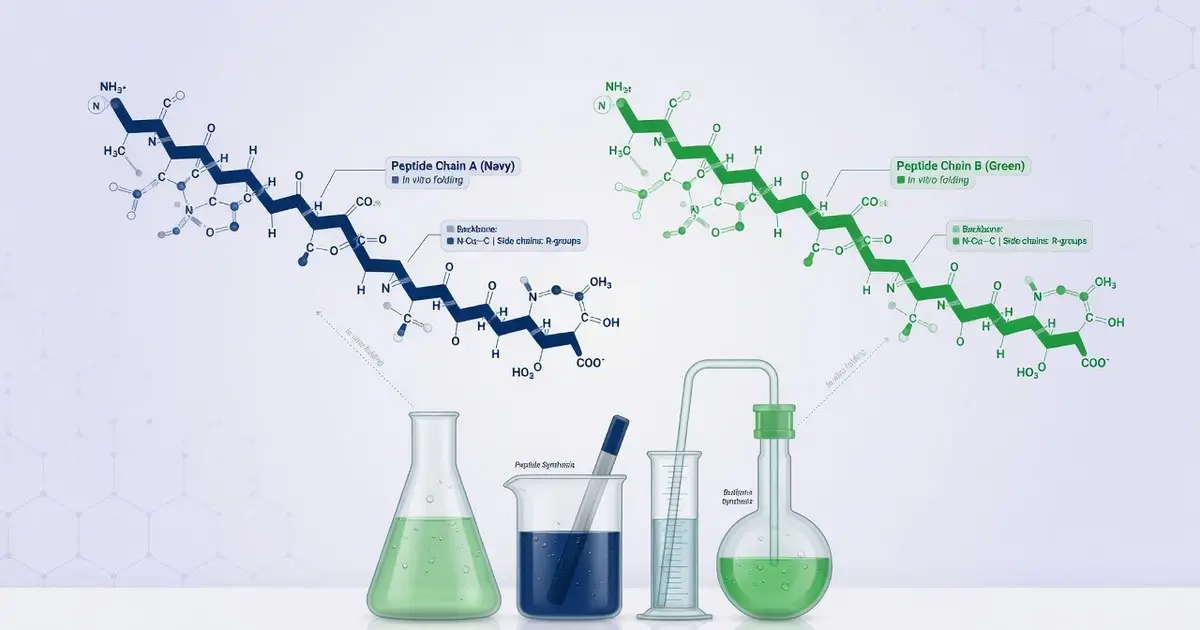
National Science Labs Peptides vs. Countrywide Peptides
National science labs peptides vs Countrywide Peptides: compare third-party HPLC COAs, sourcing transparency, and storage in this 2026 research checklist.
📋 Table of Contents
National science labs peptides and Countrywide Peptides both supply research-grade peptides labeled strictly for in vitro laboratory research use only—not for human or veterinary application. The comparison that matters in 2026 is not branding but verification: third-party testing transparency, sourcing disclosure, storage documentation, and support responsiveness. Countrywide Peptides publishes batch-specific COAs with HPLC purity and mass spectrometry confirmation, and any national science labs peptides vendor should be held to the same standard before you order.
Key takeaways
- National science labs peptides and Countrywide Peptides both sell research-grade peptides for laboratory use only; neither is intended for human or veterinary application.
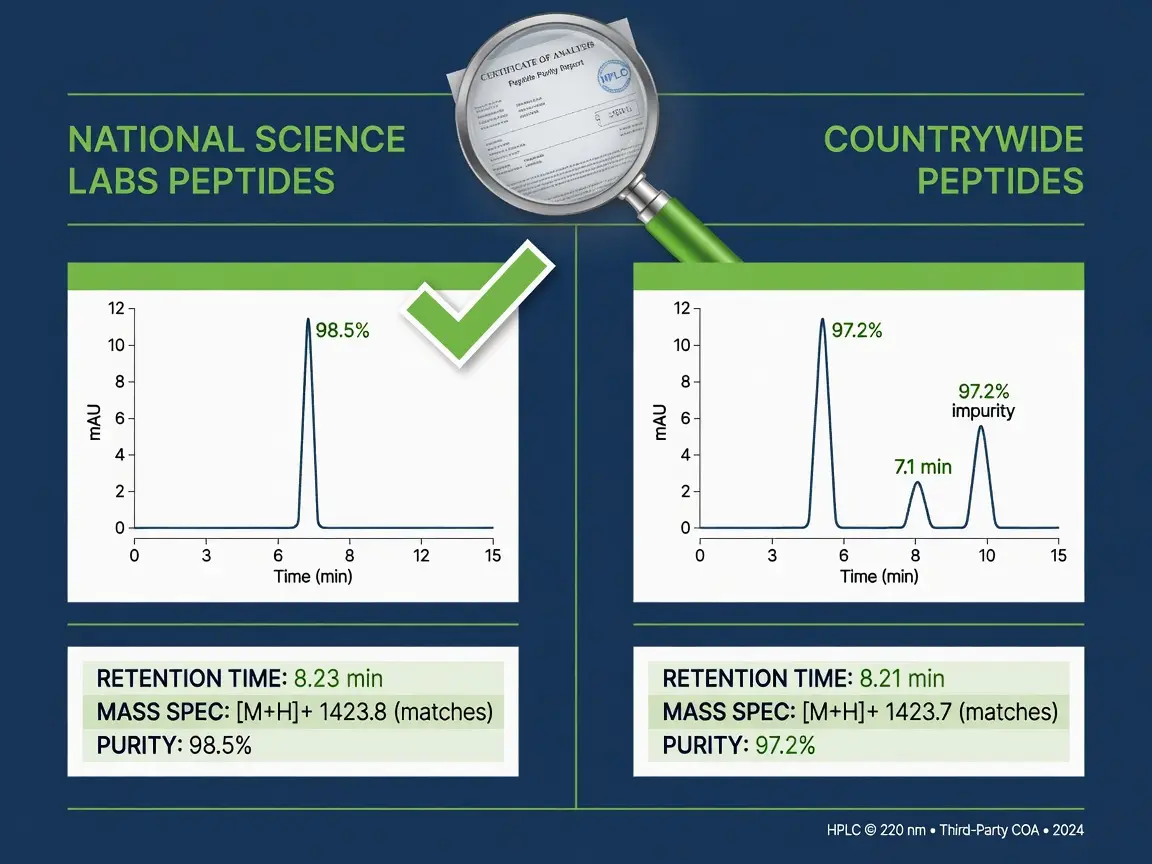
- Third-party testing is the single most important evaluation factor: every batch should come with a COA showing HPLC purity (often ≥98%), mass spectrometry identity confirmation, and a batch number matching the vial.
- Countrywide Peptides tests every batch through independent third-party laboratories before release, and batches that fail standards never ship.
- Peptides are heat- and freeze-thaw-sensitive molecules, so storage temperature, desiccant use, and cold-chain shipping directly affect research reliability.
- Documentation, not marketing copy, should drive your decision: request a current, batch-specific COA from any national science labs peptides vendor and compare their responses.
What exactly are national science labs peptides and how do they compare to Countrywide Peptides?
National Science Labs is an online vendor that sells research-grade peptides and related compounds to the U.S. research community. Like most suppliers in this category, the company markets its products for in vitro laboratory research—not for human or animal use. National science labs peptides are typically offered alongside lyophilized powders, reconstitution guides, and basic storage recommendations, but vendor-specific details such as catalog size, testing frequency, sourcing partners, and shipping terms change over time. We will not characterize a competitor’s internal practices that we cannot independently verify.
What we can do is explain exactly how Countrywide Peptides handles sourcing and testing, and give you a checklist you can apply to any supplier—national science labs peptides included. For a deeper look at how to evaluate any peptide vendor, see our Peptide Suppliers USA: How to Choose a Trusted Source. Both companies operate in the same space: supplying research-grade peptides to the U.S. research community, clearly labeled for laboratory use only.
Countrywide Peptides distinguishes itself through documented batch-level testing and sourcing transparency, which we describe in the next sections. The rest of this guide gives you the exact questions to ask any national science labs peptides vendor so you can compare evidence rather than claims.
Peptide research depends on molecular identity and purity. Even a small contamination of a truncated sequence can change experimental outcomes. That is why documented testing, not brand familiarity, should drive your choice. In the sections below, we break down the exact verification steps for any supplier.
Why does third-party testing decide the national science labs peptides comparison?
Third-party testing is the single most important factor in any peptide supplier comparison. A legitimate supplier tests every batch through an independent third-party laboratory and provides a Certificate of Analysis (COA) that includes three specific items: HPLC purity results for the specific batch, usually expressed as a percentage (for example, ≥98% purity); mass spectrometry data confirming molecular identity and mass-to-charge ratio; and batch numbers that match the exact vial you receive, not a different lot or a representative sample. Ask any vendor—including national science labs peptides suppliers—how often batches are tested and whether you can review a COA before purchasing.
Hesitation, vague answers, or offering only a ‘typical’ COA are red flags. External validation matters here: peer-reviewed literature on peptide quality control consistently emphasizes the need for orthogonal analytical methods like HPLC and mass spectrometry. See PubMed literature on peptide purity analysis for context.
When you evaluate national science labs peptides, apply the same third-party testing standard you would to any vendor. Request the COA for the exact batch you intend to order, and verify that the batch number on the certificate matches the vial label. If a vendor cannot produce a current, batch-specific COA before purchase, that is a significant warning sign regardless of the company’s name or reputation. Countrywide Peptides publishes its testing documentation openly—see our Countrywide Peptides: 5 Proven Quality Standards for Labs page for details.
HPLC measures the proportion of the target peptide relative to impurities by separating molecules based on polarity. Mass spectrometry then confirms the molecular weight matches the expected sequence. Together, these two methods catch both purity failures and identity errors. A COA that lists only HPLC purity without mass spectrometry is incomplete for research use. This is why the independent laboratory name matters—if the vendor performed testing in-house, there is an inherent conflict of interest.
💡 Key Takeaway: Why does third-party testing decide the national science labs peptides comparison?
💡 Key Takeaway: Why does third-party testing decide the national science labs peptides comparison?
How do national science labs peptides and Countrywide Peptides differ on sourcing transparency?
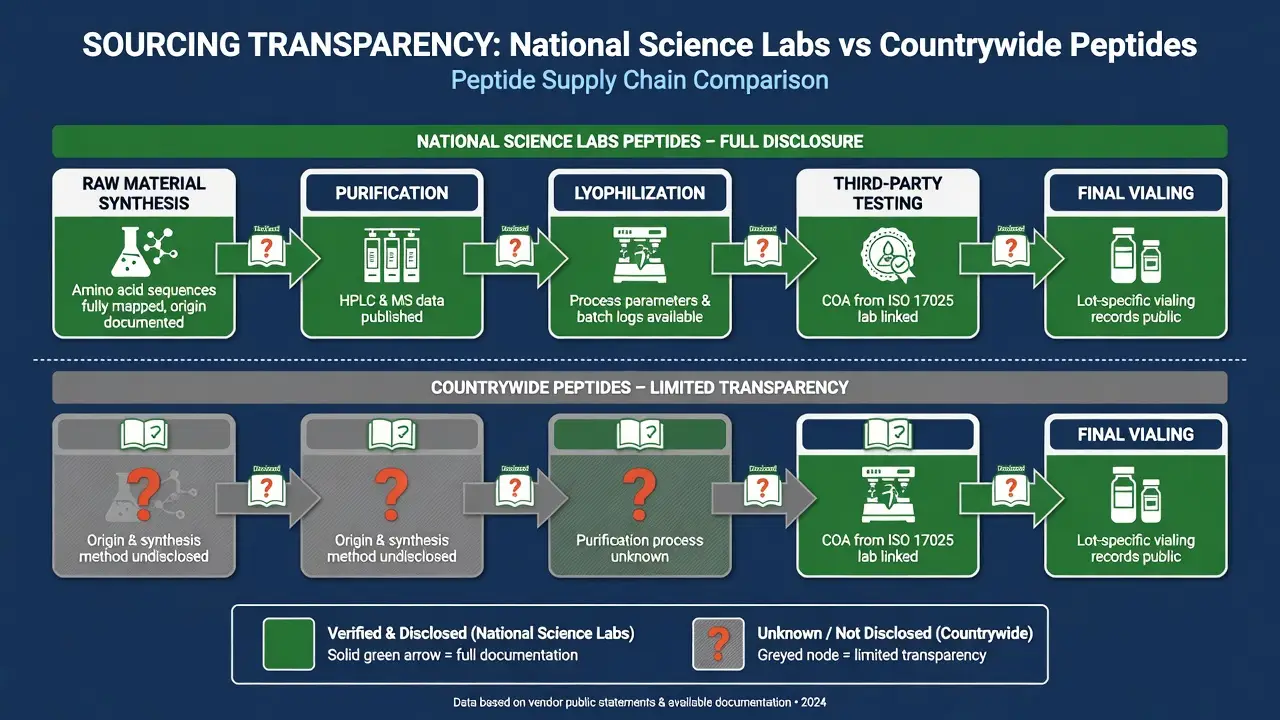
Where are the peptides synthesized? Established suppliers work with vetted manufacturing partners and can describe the chain of custody from synthesis to shipment. Vague answers about sourcing—such as ‘we use multiple overseas labs’ without specifics—should concern you far more than a small price difference. For national science labs peptides or any other vendor, ask directly: who synthesizes the peptides, what quality systems do those manufacturers follow, and how is each batch tracked from production to your bench?
Countrywide Peptides follows three documented sourcing practices: manufacturing partners from established peptide synthesis laboratories with documented quality systems rather than reselling unverified stock from anonymous origins; batch tracking so the COA you receive corresponds to the exact vial in your hand; and chain of custody, meaning our support team can speak to how products move from synthesis to storage to shipment. For national science labs peptides, ask the vendor to describe the same three points. If they cannot, that is a gap you should weigh carefully.
How does Countrywide Peptides handle testing? Every batch we sell is tested by independent third-party laboratories before it is released, and batches that fail purity or identity standards never ship. This testing standard is what you should demand from any national science labs peptides vendor as well. For a broader look at related vendor comparisons, see Nationwide Peptides Reviews | Countrywide Peptides.
| Evaluation factor | Countrywide Peptides | What to ask any national science labs peptides vendor |
|—|—|—|
| Third-party testing | Every batch tested by independent labs; COA with HPLC and MS | Request batch-specific COA before purchase |
| Sourcing disclosure | Vetted synthesis partners; chain of custody documented | Ask who synthesizes and how batches are tracked |
| Storage and shipping | Controlled storage, desiccant, protective packaging | Request storage temperature and cold-chain details |
| Support responsiveness | Direct answers to batch questions | Send a pre-sale question and measure response time |
Sourcing transparency is not about revealing proprietary trade secrets. It is about confirming that the peptide you receive was synthesized under documented quality systems and tracked from production to shipment. A vendor that cannot answer basic sourcing questions may be reselling stock from anonymous overseas brokers. That practice increases the risk of counterfeit or mislabeled vials. Ask for a written sourcing statement, not a verbal assurance.
Which questions should researchers ask any national science labs peptides vendor before ordering?
Before you order from national science labs peptides or any other supplier, send a pre-sale message with these five questions:
1. Can you provide a batch-specific COA for the exact vial I will receive, including HPLC purity percentage and mass spectrometry confirmation?
2. Who synthesizes your peptides, and what quality systems do those manufacturers follow?
3. What are your storage conditions before shipment, and do you include desiccant and cold-chain packaging?
4. How often do you test each batch, and what happens to batches that fail purity or identity standards?
5. Can I speak with a technical support specialist about batch documentation, not just a sales representative?
These questions cut through marketing language. A vendor that answers directly and provides documentation is already ahead of one that deflects or sends generic PDFs. For national science labs peptides, treat every answer as a data point, not a guarantee. Cross-check claims with the documentation you receive.
These questions are designed to be asked before you spend a dollar. A vendor that answers all five with specific documentation deserves serious consideration. A vendor that answers with links to a homepage or generic FAQs has not met the bar. Keep a record of the answers and compare them across vendors. The goal is not to punish smaller suppliers; it is to verify that any supplier, large or small, can demonstrate batch-level quality control.
What testing standards should researchers apply to national science labs peptides in 2026?
In 2026, research-use-only peptide buyers should insist on three analytical standards before accepting any batch. First, HPLC purity should be reported as a percentage for that specific batch, and a threshold of ≥98% is common for research-grade peptides. Second, mass spectrometry should confirm the molecular identity and mass-to-charge ratio, not just a UV absorbance peak. Third, the COA must carry a batch number that matches the vial label exactly. If any of these three items is missing, the testing claim is incomplete.
Apply these standards to national science labs peptides exactly as you would to any other vendor. Do not accept a ‘representative’ COA or a ‘typical’ purity range. Ask whether the independent laboratory is named on the certificate, and whether the vendor can resend the COA for the same batch if you request it a week later. Reproducibility of documentation matters. Countrywide Peptides publishes batch-specific testing data—see our Countrywide Peptides: 5 Proven Quality Standards for Labs page for a detailed walkthrough.
| Testing item | Minimum expectation | Why it matters |
|—|—|—|
| HPLC purity | ≥98% for research-grade peptides | Confirms the batch is not contaminated with truncated or failed sequences |
| Mass spectrometry | Molecular identity confirmation | Verifies the peptide is the correct molecule, not a byproduct |
| Batch number match | COA batch = vial label batch | Prevents substitution of a tested batch with an untested one |
| Independent lab name | Listed on COA | Shows the testing was not performed in-house by the vendor |
In 2026, many research institutions now require that purchased peptides come with third-party COAs before they can be used in funded projects. Some grant reviewers specifically ask for documentation of peptide purity and identity. Meeting the ≥98% HPLC threshold is not optional in many peer-reviewed journals. This trend means that choosing a vendor with weak documentation can delay your research timeline. Apply the same standard to any peptide vendor as you would to a reagent from a major chemical supplier.
💡 Key Takeaway: What testing standards should researchers apply to national science labs peptides in 2026?
How do storage and handling practices protect national science labs peptides integrity?
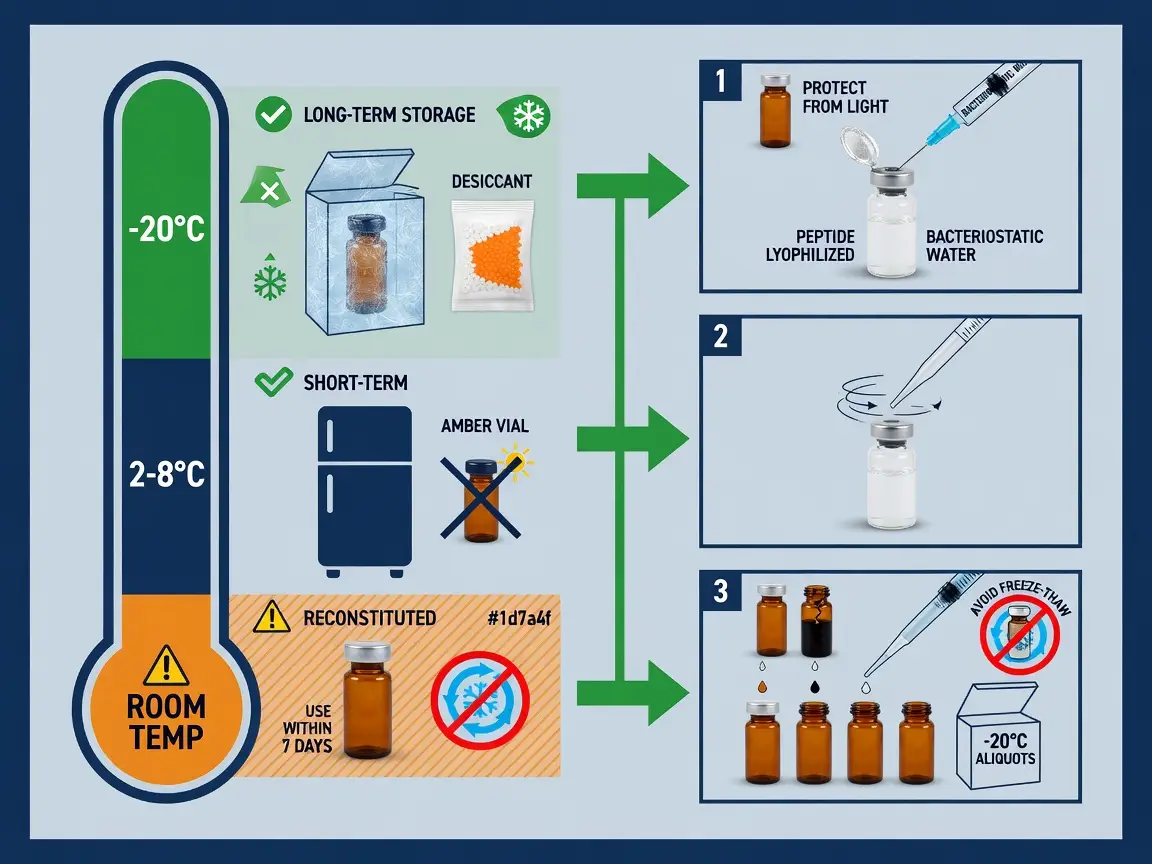
Peptides are heat- and freeze-thaw-sensitive molecules. Lyophilized powders generally remain stable when stored at controlled room temperature or refrigerated, but after reconstitution, most peptides require cold storage and protection from repeated freeze-thaw cycles. Desiccant packets help prevent moisture uptake, which can degrade peptide structure. Cold-chain shipping matters because a peptide that sits in a hot warehouse or delivery truck for days can lose activity even if the original COA showed high purity.
When evaluating national science labs peptides, ask the vendor to describe storage conditions from synthesis to your bench. Do they store lyophilized vials in a temperature-controlled environment? Do they include desiccant with each vial? Do they use insulated packaging or cold packs during summer months? A vendor that cannot answer these questions may not be controlling the variables that affect research reproducibility. Countrywide Peptides uses controlled storage, desiccant, and protective packaging, and our support team can explain the cold-chain steps for any order.
Lyophilized peptides should be stored in a cool, dry place, and many researchers keep unopened vials refrigerated. After reconstitution, aliquoting into single-use portions prevents repeated freeze-thaw damage. Desiccant packets inside the vial packaging absorb residual moisture and extend shelf life. If a vendor ships without desiccant or uses only a thin envelope, that is a storage red flag. Document the storage instructions you receive and compare them with published stability data for the specific peptide sequence.
What red flags reveal unreliable national science labs peptides vendors?
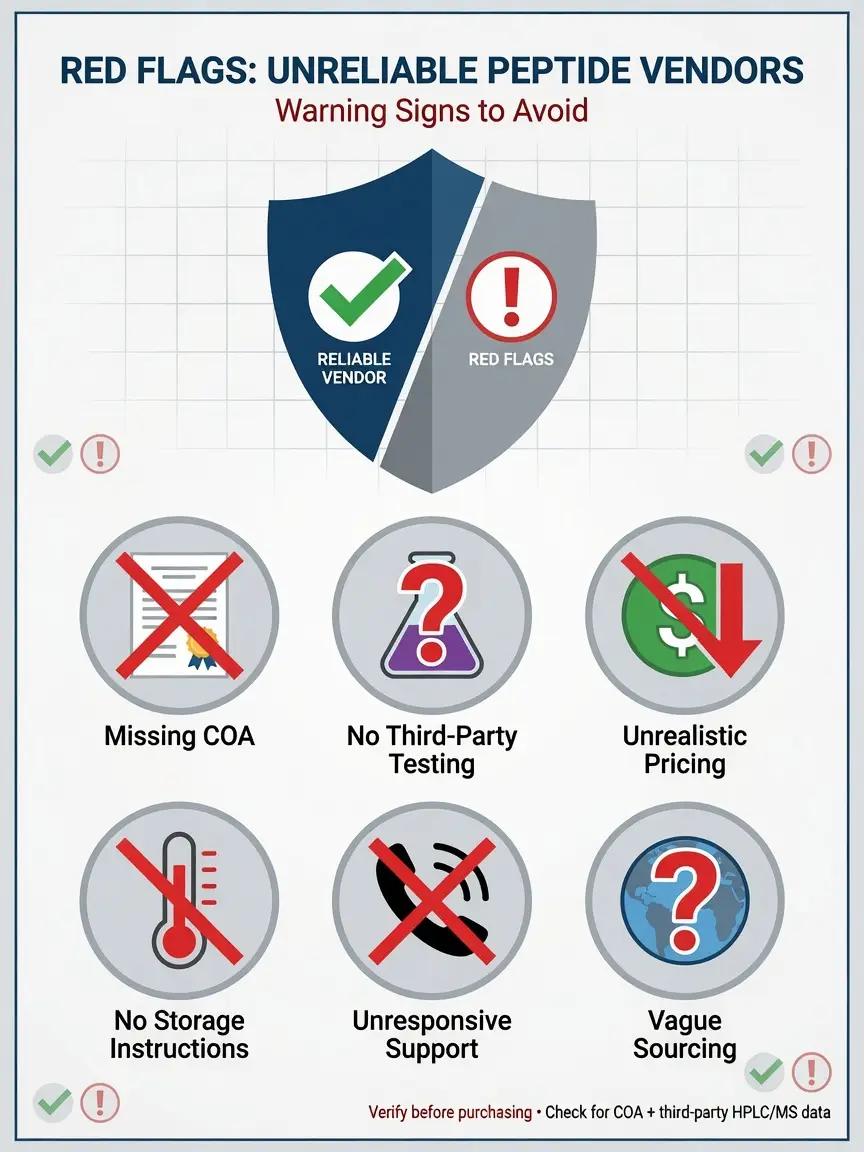
Watch for five specific red flags when comparing national science labs peptides suppliers. First, a vendor that offers only a ‘typical’ COA or a PDF with no batch number. Second, a vendor that refuses to name its independent testing laboratory. Third, a vendor that cannot explain how batches are tracked from synthesis to shipment. Fourth, a vendor that ships peptides without desiccant or temperature protection. Fifth, a vendor whose support team avoids direct questions about batch documentation and instead repeats marketing slogans.
These red flags apply to any research chemical supplier, not just national science labs peptides. If you encounter two or more, walk away. A low price is not a substitute for documented quality control. The most expensive mistake in peptide research is not the purchase price—it is losing weeks of work to a contaminated or misidentified sample.
Red flags compound. A vendor that cannot provide a batch number but promises ‘pharmaceutical grade’ purity is making an unsupported claim. A vendor that ships peptides in a plain envelope without temperature protection is ignoring basic chemistry. These issues do not exist in isolation; they indicate a systemic lack of quality infrastructure. The safest approach is to require documentation first and ask questions later. If a vendor passes the documentation test, then consider price, shipping speed, and catalog size.
What does vendor support tell you about national science labs peptides reliability?
Support responsiveness is a direct window into a vendor’s operational rigor. Send a pre-sale question about batch-specific COAs and measure the response time and quality. A reliable vendor will answer within one business day with specific documentation, not a canned FAQ link. A vendor that takes three days to reply with vague language may be understaffed or evasive.
For national science labs peptides, test support before you spend. Ask: ‘Can you send the COA for batch X before I order?’ If the answer is a direct PDF with HPLC and MS data, that is a strong positive signal. If the answer is ‘we only provide COAs after purchase,’ consider that a warning. Countrywide Peptides support team answers batch questions directly, and we encourage researchers to compare our responsiveness with any other vendor.
Support quality also reflects how a vendor handles problems after purchase. If a batch arrives damaged or a COA is missing, can you reach a technical specialist? A reliable vendor will have a clear return or replacement policy for research-use products that fail documentation standards. Ask about that policy before ordering. If the vendor has no documented policy for batch disputes, that is another risk factor. Countrywide Peptides support team is available to answer batch questions directly, and we encourage researchers to compare our responsiveness with any other vendor.
💡 Key Takeaway: What does vendor support tell you about national science labs peptides reliability?
What documentation should you demand from any peptide supplier?
Before ordering any research peptide, demand four documents. First, a current COA with batch number, HPLC purity percentage, and mass spectrometry confirmation. Second, a storage and handling statement that includes temperature ranges and desiccant use. Third, a sourcing statement that identifies the manufacturing partner or at least the quality system used. Fourth, a chain-of-custody summary showing how the batch moved from synthesis to your facility. If a vendor cannot produce all four, proceed with caution.
For national science labs peptides, treat missing documentation as a disqualifier, not a negotiation point. A vendor that cannot provide a batch-specific COA before purchase is asking you to trust an unverified product. Countrywide Peptides provides batch-specific COAs and storage guidance for every order. See our Peptide Suppliers USA: How to Choose a Trusted Source page for a printable documentation checklist.
Documentation is not a one-time request. Before each new order, ask for a current COA because different batches may have different purity values. A vendor that sends the same COA for multiple orders is not tracking batches properly. Keep a file of every COA you receive, including the batch number and date of receipt. If a question arises later about a specific experiment, that file is your evidence. For national science labs peptides, treat missing documentation as a disqualifier, not a negotiation point.
How can researchers verify third-party testing claims without relying on vendor marketing?
Independent verification is the strongest defense against marketing spin. Ask the vendor to name the third-party laboratory on the COA, then contact that laboratory directly to confirm the batch number and test date. Some independent labs offer online verification portals, while others will confirm by email. If the vendor refuses to name the lab, treat the testing claim as unverified. This step applies to national science labs peptides vendors exactly as it applies to Countrywide Peptides or any other supplier.
You can also cross-check purity claims against peer-reviewed literature. The PubMed database includes numerous studies on peptide purity analysis and quality control methods. Reviewing these sources helps you understand what orthogonal HPLC and MS data should look like. For a real-world example of how documentation should be presented, see our nationalsciencelabs.com: 5 Proven Lab Standards (2026) page.
Independent verification can also include checking the laboratory’s accreditation status. Many third-party peptide testing labs hold ISO/IEC 17025 accreditation, which means their methods and reporting meet international standards. Ask the vendor whether the testing laboratory is accredited and whether the COA includes the accreditation logo. If the lab is not accredited, that does not automatically disqualify the vendor, but it lowers confidence. Peer-reviewed literature on peptide purity analysis often describes the expected format of HPLC and MS data, so you can compare the COA you receive against published examples.
What is the bottom line for choosing between national science labs peptides and Countrywide Peptides?
The bottom line is not which brand name sounds more trustworthy. The bottom line is which vendor can produce batch-specific, third-party COAs before you pay, describe sourcing and chain of custody clearly, and answer storage questions without hesitation. Countrywide Peptides meets all three tests: every batch is tested by independent third-party laboratories, sourcing partners are vetted, and storage and shipping practices are documented. When you evaluate national science labs peptides, hold them to exactly the same standard. If they pass, buy with confidence. If they cannot produce the same documentation, the comparison is already decided.
For a detailed look at how Countrywide Peptides maintains these standards, see our Countrywide Peptides: 5 Proven Quality Standards for Labs page. For a side-by-side review of related vendors, see Nationwide Peptides Reviews | Countrywide Peptides.
A final practical step is to order a small test batch and send a sample to your own independent laboratory for confirmation. This is standard practice in many research groups. If the independent result matches the vendor’s COA, you have strong evidence of reliability. If it does not, you have documentation to request a refund or replacement. This step removes all doubt from the national science labs peptides comparison.
💡 Key Takeaway: What is the bottom line for choosing between national science labs peptides and Countrywide Peptides?
FAQ
Are national science labs peptides intended for human or veterinary use?
No. All products discussed, including national science labs peptides, are sold strictly for in vitro laboratory research purposes only. They are not for human use, not for veterinary use, and not intended to diagnose, treat, cure, or prevent any disease. Researchers must be 21+ to purchase.
What purity percentage should I look for in a COA for national science labs peptides?
Look for HPLC purity of ≥98% for research-grade peptides. The COA must also include mass spectrometry confirmation of molecular identity and a batch number that matches the vial label. Do not accept a ‘typical’ COA.
Does Countrywide Peptides publish COAs before purchase?
Yes. Countrywide Peptides tests every batch through independent third-party laboratories before release, and batches that fail purity or identity standards never ship. You can request a batch-specific COA before ordering, and the batch number will match the vial you receive.
How should I store national science labs peptides after delivery?
Follow the vendor’s storage guidance. Lyophilized powders should be kept dry and protected from heat; after reconstitution, store according to the specific peptide’s stability requirements and avoid repeated freeze-thaw cycles. Always use desiccant and keep vials sealed when not in use.
Can I verify a third-party testing claim without relying on vendor marketing?
Yes. Ask the vendor to name the independent laboratory on the COA, then contact that laboratory to confirm the batch number and test date. Cross-check with peer-reviewed literature on peptide purity analysis available through PubMed.
Ready to Take the Next Step?
Every product includes lot-specific documentation and third-party purity testing.
Explore Our Research Products →Free shipping on qualifying orders · Batch COA on request