
What Research Peptides Are: A Lab-Oriented Primer
What Research Peptides Are: A Lab-Oriented Primer is a peptides guide 2026 covering COA documentation, lot identity, and storage SOPs for U.S. laboratory research.
📋 Table of Contents
What Research Peptides Are: A Lab-Oriented Primer is a peptides guide 2026 that answers a recurring catalog question: research peptides are short amino-acid sequences supplied for controlled laboratory investigation—assay development, mechanistic models, and method transfer—not for human or veterinary administration. This lab-oriented primer defines documentation, onboarding, and catalog framing for U.S. laboratory programs.
Key takeaways
- Research peptides in this context are short amino-acid sequences for in vitro assay development and mechanistic models, never for human or veterinary use.
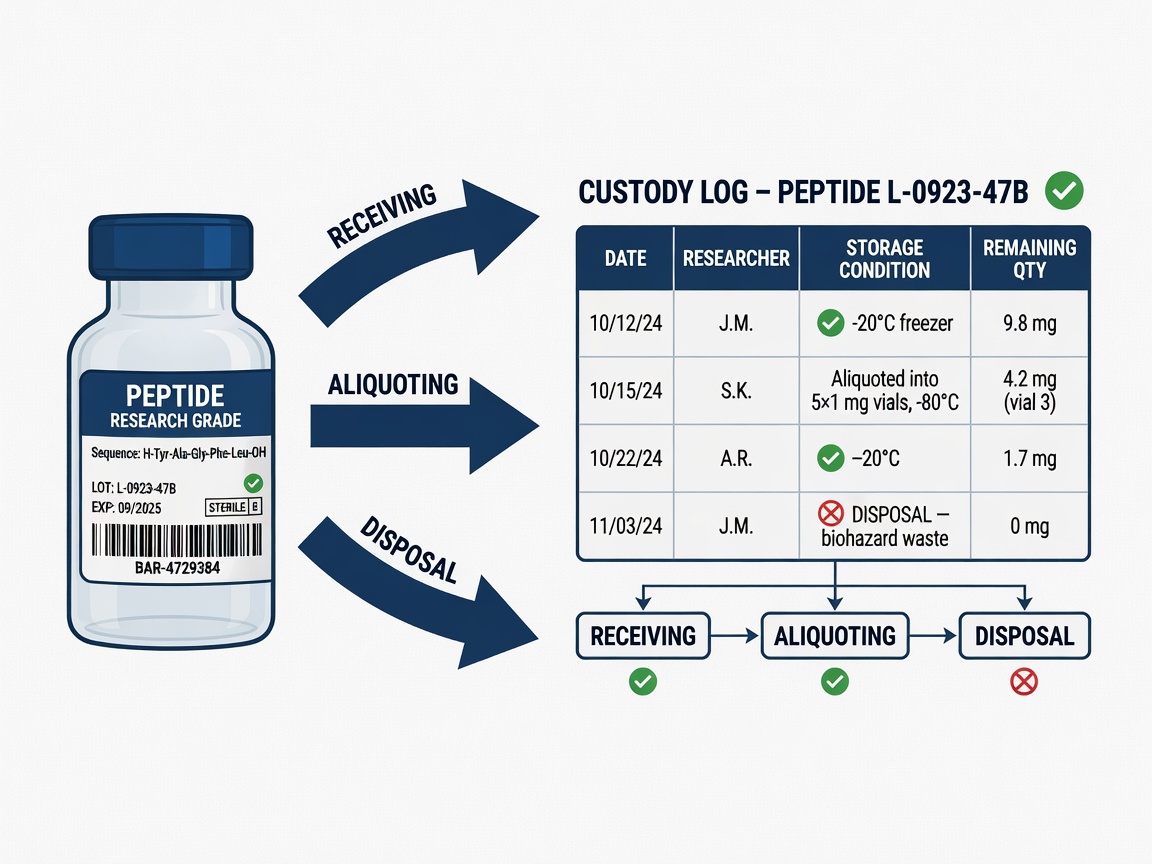
- What Research Peptides Are: A Lab-Oriented Primer emphasizes lot identity, COA access, and custody logs as non-negotiable records for repeat comparisons.
- Standardized aliquot labeling and SOP storage beside lot metadata reduce transfer errors between sites.
- Catalog listings should foreground research-use labeling and documentation availability, not performance claims.
- Onboarding steps include label vs PO checks, aliquot conventions, and custody log training.
Research use notice: The products discussed on this site are sold strictly for in vitro laboratory research purposes only. They are not for human use, not for veterinary use, and not intended to diagnose, treat, cure, or prevent any disease. All information presented is for educational purposes in a research context. Must be 21+ to purchase.
What Are Research Peptides in a Controlled Laboratory Setting?
A controlled laboratory setting treats this peptides guide 2026 as a definitional boundary, not a product claim. This definitional boundary is what this peptides guide 2026 returns to whenever a catalog description drifts toward therapeutic language. In practice, research peptides are short chains of amino acids—often fewer than 50 residues—used as analytical probes, enzyme substrates, or binding partners in assay systems. They are not formulated, tested, or labeled for human or veterinary administration.
Laboratory staff encounter these materials in method transfer, receptor-binding studies, and quality-control experiments. The key distinction is intent: a research peptide exists to generate reproducible data under documented conditions, not to deliver a physiological effect in a living subject. Because peptide stability and solubility vary with sequence, buffer, and storage history, the same nominal sequence can behave differently across lots.
This peptides guide 2026 therefore directs attention to the metadata around the peptide—lot number, certificate of analysis, purity determination, and residual solvent profile—rather than to the sequence alone. This metadata allows a lab to compare repeats months later without re-deriving every assay condition from scratch.
Common research peptide categories include short signaling fragments, enzyme substrates with fluorogenic tags, and structural mimics used in crystallography or binding assays. Each category requires a tailored documentation set, and this peptides guide 2026 does not assume one template fits all. For example, a fluorogenic substrate may require extinction coefficient data, while a binding mimic may require mass confirmation and purity by HPLC.
A short amino-acid sequence can be produced by solid-phase synthesis and then lyophilized for storage. The COA typically reports molecular weight, purity by HPLC, and mass spectrometry confirmation. Without those records, a plate map loses interpretive value because the operator cannot confirm that the material in well A1 matches the material tested three months earlier.
Why Does This peptides guide 2026 Matter for Assay Development?
Assay development depends on controlled variables. When a lab uses a peptide as a standard, competitor, or substrate, the assay output is only as trustworthy as the peptide’s identity and purity. This peptides guide 2026 matters because it shifts the conversation from what a peptide is chemically to what a peptide must be documented to be in a repeatable experiment.
A lab might run an enzyme kinetics assay with a peptide substrate in January and repeat it in July. If the January lot was 95% pure by HPLC and the July lot was 98% pure, the observed rate difference may reflect purity, not biological activity. The COA lets the analyst separate these variables. Custody logs add another layer: they record who handled the vial, when it was aliquoted, and under what conditions it was stored.
Without lot identity, COA access, and custody logs, teams cannot compare repeats months later. The primer treats these three records as a single bundle. Plate maps, no matter how carefully designed, lose interpretive value when the peptide lot cannot be traced to its documentation. A practical application of this peptides guide 2026 is separating purity-driven signal shifts from biological ones.
A practical example: a receptor-binding assay uses a peptide ligand at a fixed concentration. The lab freezes an aliquot from the original vial after reconstitution. Three months later, a new technician uses a different aliquot and obtains weaker binding. The custody log shows the second aliquot was thawed twice, while the first was thawed once. The COA confirms the same lot. The difference is attributable to handling, not to a supplier error. This kind of troubleshooting is only possible when this peptides guide 2026 has been applied consistently.
💡 Key Takeaway: Why Does This peptides guide 2026 Matter for Assay Development?
How This peptides guide 2026 Shapes Lot Identity and Custody Logs
Lot identity is the backbone of peptide documentation. Each vial or aliquot should carry a unique identifier that links back to the supplier’s lot number, the receiving date, and the COA. This peptides guide 2026 recommends standardizing this identifier before the first experiment, not after results are in question.
A custody log records every transfer: from receiving to storage, from storage to reconstitution, from reconstitution to aliquoting, and from aliquoting to assay plate. The log need not be complex. A simple table with date, operator, action, and storage location is sufficient for most research programs. The key is consistency: if one technician logs by date and another by lot number, the log becomes ambiguous. This consistency is a recurring theme in this peptides guide 2026.
Aliquot labeling conventions also matter. A label such as P-1024-A1 is more useful than a handwritten abbreviation that only one person understands. The primer suggests labeling each aliquot with the lot number, aliquot number, reconstitution date, and concentration if applicable. These labels should survive freeze-thaw cycles without smudging.
SOPs should be stored beside lot metadata for transfers between sites. When a peptide moves from one freezer to another, or from one building to another, the receiving site needs the same documentation as the sending site. A shared drive or binder organized by lot number prevents duplication and loss.
The table below summarizes the minimum records recommended in this peptides guide 2026.
| Record type | What it captures | Why it matters |
|————-|——————|—————-|
| Lot number | Supplier’s production batch identifier | Links vial to COA and receiving date |
| COA | Purity, mass confirmation, storage statement | Confirms identity and quality claims |
| Custody log | Date, operator, action, location | Reconstructs handling history |
| Aliquot label | Lot, aliquot number, date, concentration | Prevents mix-ups after freeze-thaw |
| SOP | Storage, reconstitution, disposal | Standardizes transfer between sites |
What Does This peptides guide 2026 Recommend for Receiving and Storage?
Receiving is the first opportunity to catch documentation errors. New laboratory staff should train on label vs PO checks before any peptide is accepted into inventory. The label on the vial must match the purchase order, the packing slip, and the COA. Discrepancies should be resolved with the supplier before the peptide is used.
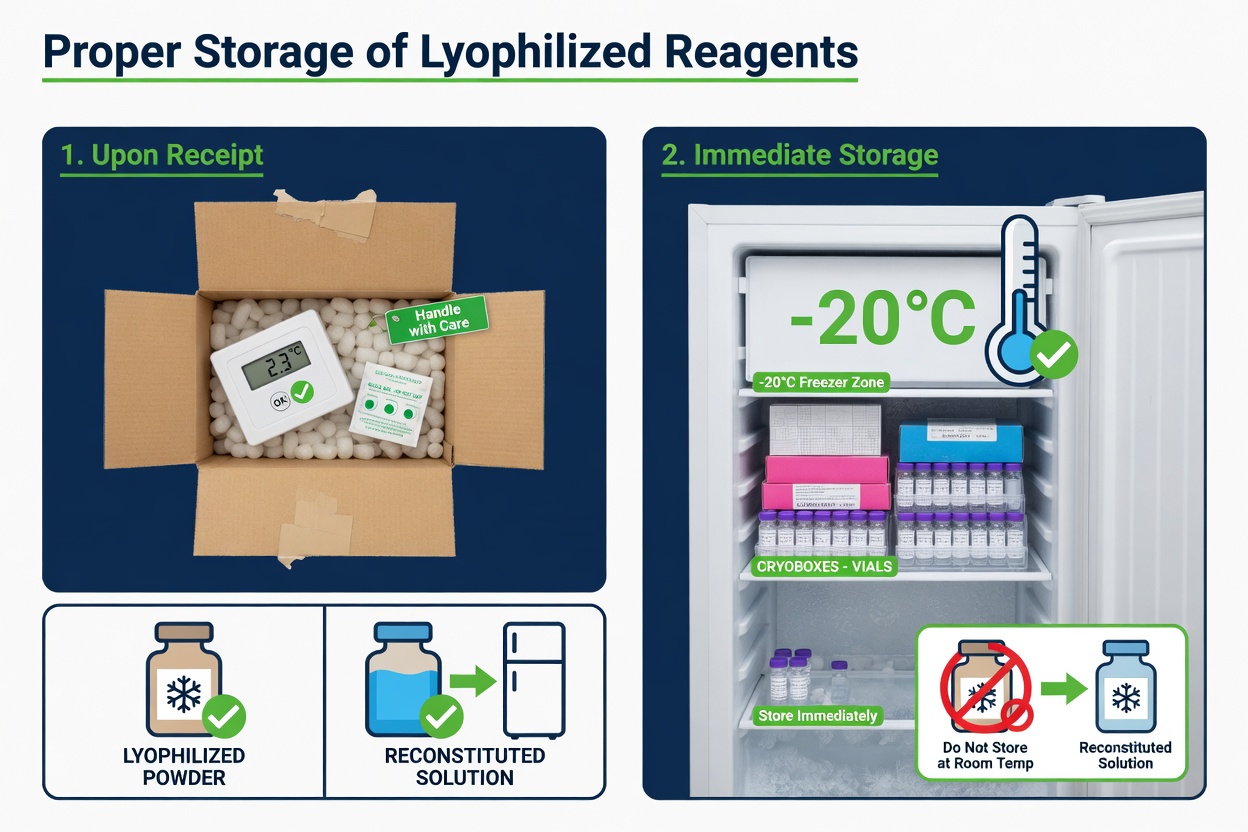
Aliquot labeling conventions should be standardized during receiving, not after. A receiving technician can pre-label cryovials with the lot number and aliquot sequence, then transfer the peptide into labeled cryovials according to the SOP. This step reduces the chance that an unlabeled vial will be left in a shared freezer. Storage conditions vary by peptide; some require -20°C, others -80°C, and a few are stable lyophilized at 2-8°C. The COA often states the recommended storage temperature. This peptides guide 2026 instructs labs to record that temperature in the custody log and on the aliquot label.
For lyophilized peptides, reconstitution should follow the COA’s suggested solvent, usually sterile water, dilute acetic acid, or buffer. The reconstitution date and solvent should be written on the vial. Avoid repeated freeze-thaw cycles by aliquoting into single-use volumes. This peptides guide 2026 recommends a maximum of two freeze-thaw cycles for most peptides, but the COA may specify fewer.
A simple receiving checklist includes: confirm vial label matches PO and packing slip, verify COA is present and legible, log the lot number into the inventory system, assign an internal ID, and place the vial in the recommended storage location. This peptides guide 2026 suggests completing these five steps before the end of the receiving day.
How to Implement This peptides guide 2026 Across Multiple Lab Sites
Multi-site peptide transfers create documentation risk. A peptide prepared in one building may be shipped to another for a collaborative assay. This peptides guide 2026 recommends a transfer packet that includes the COA, the custody log, the aliquot label template, and the storage SOP. The receiving site should not accept a peptide without this packet.
Electronic inventory systems can help, but paper logs remain common. The key is that both sites use the same lot numbering convention. If the sending site calls a vial “P-1024-A1” and the receiving site calls it “1024A,” the chain of custody breaks. This peptides guide 2026 advises labs to adopt a single naming scheme across all sites before the first cross-site transfer.
Temperature monitoring during transfer is also critical. A peptide that must be stored at -80°C should be shipped on dry ice and logged with a temperature indicator. If the indicator shows a thaw, the receiving site should quarantine the vial and contact the supplier. This peptides guide 2026 treats temperature excursions as documentation events, not as routine handling.
A quarterly audit of peptide inventories is a practical step. The audit compares physical vials to the custody log and the COA. Discrepancies—missing vials, unlabeled tubes, or expired COAs—should be resolved before the next round of experiments. This peptides guide 2026 recommends documenting the audit outcome in the same shared drive as the SOPs.
💡 Key Takeaway: How to Implement This peptides guide 2026 Across Multiple Lab Sites
Common Documentation Mistakes This peptides guide 2026 Prevents
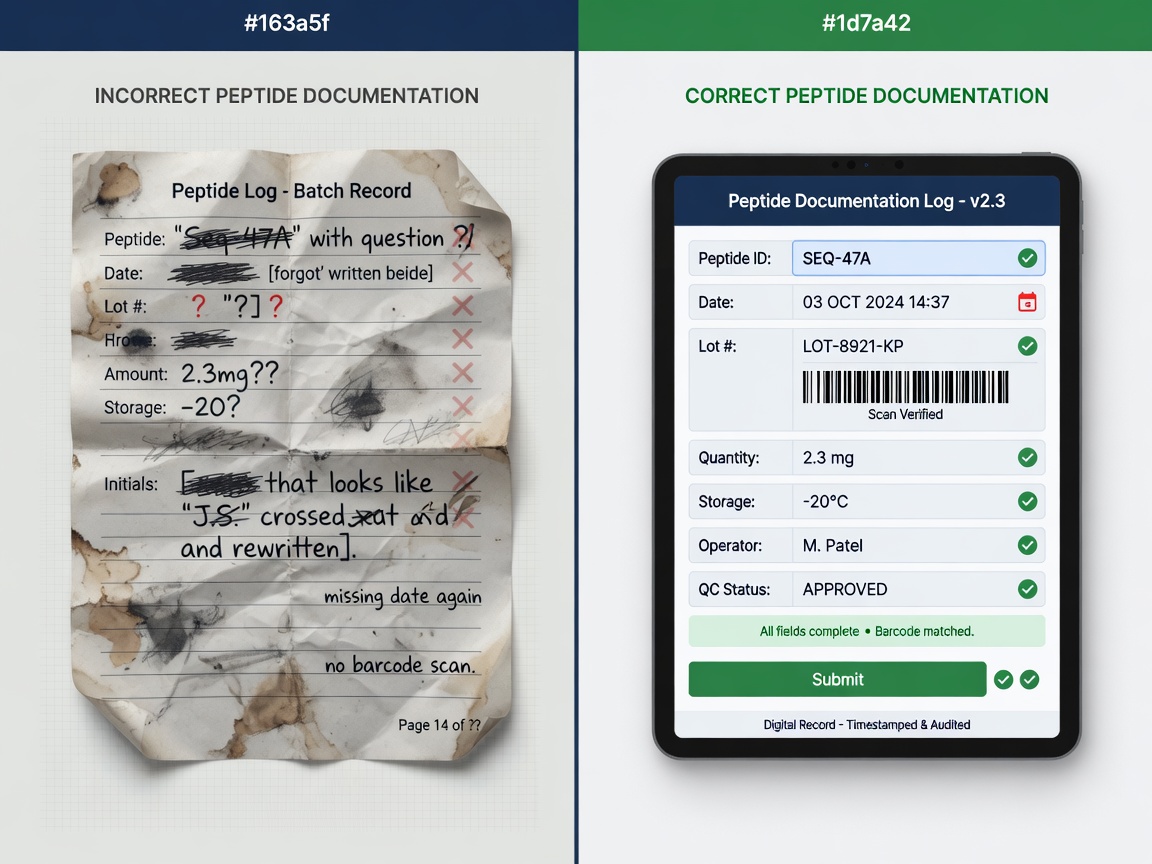
One common mistake is using a peptide without checking the COA. A researcher may assume that a vial labeled “peptide X” is identical to a previous lot. This peptides guide 2026 prevents that assumption by requiring lot-specific purity and mass data before the first assay.
Another mistake is overloading a single aliquot. If a lab reconstitutes a 1 mg vial and uses it across ten experiments over three months, the peptide may degrade with each thaw. This peptides guide 2026 recommends aliquoting into single-use volumes at receiving. The aliquot label then becomes a usage record.
A third mistake is storing SOPs separately from lot metadata. When the SOP is in one binder and the COA in another, a technician may follow an outdated reconstitution protocol. This peptides guide 2026 suggests a single folder per lot, containing the COA, the SOP, the custody log, and the aliquot map.
A fourth mistake is ignoring residual solvent data. Some peptides contain trifluoroacetic acid (TFA) or other residual solvents that can affect certain assays. The COA should list residual solvent levels. This peptides guide 2026 instructs labs to flag any peptide with TFA above the lab’s acceptance threshold for sensitive cell-based assays.
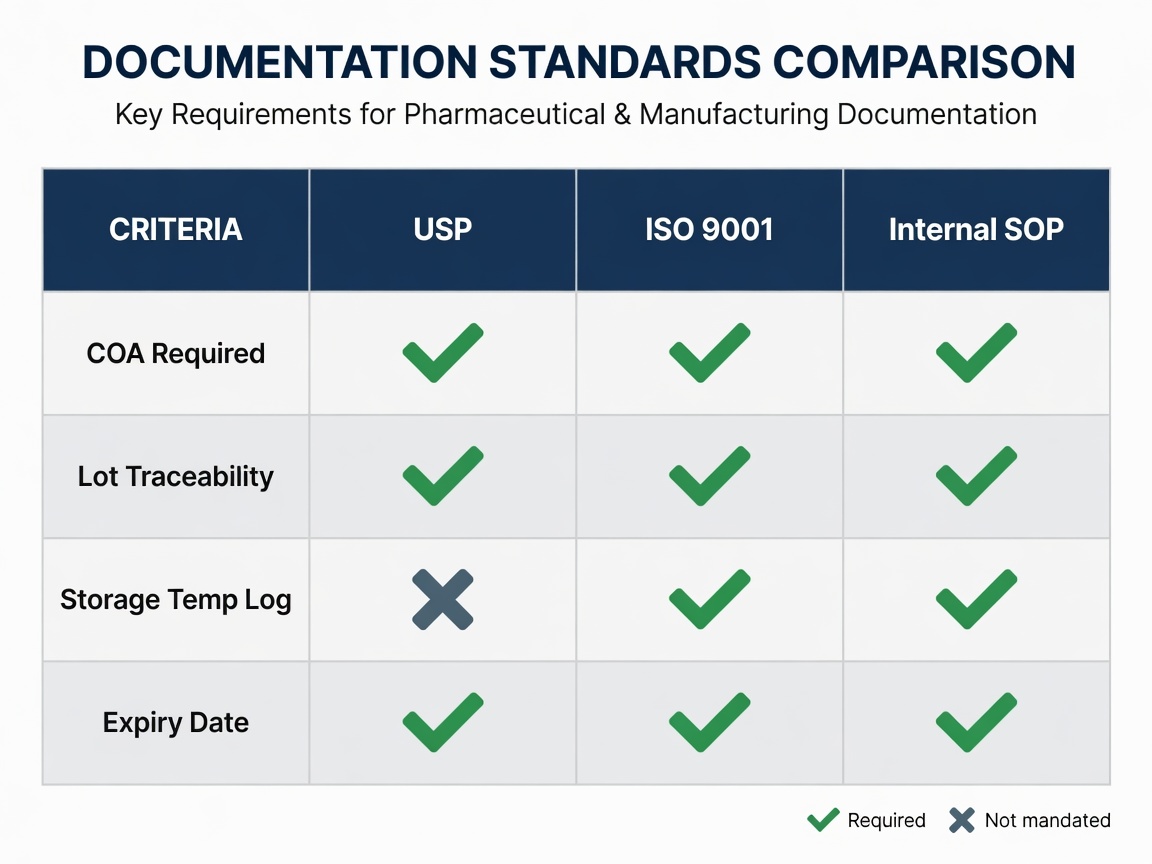
Comparing Peptide Documentation Standards: A Quick Reference
Different labs apply different documentation standards. The table below compares a minimal approach with the standard recommended in this peptides guide 2026.
| Element | Minimal approach | This peptides guide 2026 recommended approach |
|———|——————|———————————————|
| Lot tracking | Vial label only | Internal ID linked to supplier lot and COA |
| Purity check | Assumed from catalog | Verified by HPLC from COA before use |
| Custody log | Not kept | Date, operator, action, location for every transfer |
| Aliquoting | Done ad hoc | Pre-labeled single-use aliquots at receiving |
| Storage SOP | Verbal instruction | Written SOP filed with lot metadata |
| Transfer between sites | Box shipped with no documents | Transfer packet with COA, log, labels, SOP |
| Audit frequency | Never | Quarterly inventory reconciliation |
This table shows that the recommended approach adds documentation steps but removes ambiguity. The time spent at receiving and aliquoting is recovered when a repeat assay fails and the team can trace the peptide’s history in minutes. This peptides guide 2026 frames documentation as an efficiency tool, not a compliance burden.
External and Internal Resources for This peptides guide 2026
Peer-reviewed literature supports the emphasis on peptide characterization. The National Center for Biotechnology Information provides searchable access to peptide synthesis and analytical methods. Researchers can review PubMed for studies on peptide stability under different storage conditions. The NCBI hosts manuals on analytical chemistry that align with the COA requirements in this peptides guide 2026.
For supplier-side quality expectations, the Countrywide Peptides: 5 Proven Quality Standards for Labs article explains what documentation a U.S. lab should request. The Peptide Suppliers USA: How to Choose a Trusted Source guide offers a checklist that complements the receiving steps in this peptides guide 2026. Labs comparing vendors may also review National Science Labs Peptides: A Researcher’s Guide for documentation benchmarks.
💡 Key Takeaway: External and Internal Resources for This peptides guide 2026
FAQ
What exactly is this peptides guide 2026?
This peptides guide 2026 is a lab-oriented primer that defines research peptides as short amino-acid sequences for in vitro assay development, mechanistic models, and method transfer. It emphasizes lot identity, COA access, custody logs, and standardized storage over product performance claims.
Why does this primer focus on documentation instead of peptide function?
Because the same nominal peptide sequence can behave differently across lots due to purity, residual solvents, and storage history. Documentation allows a lab to separate purity-driven signal shifts from biological ones and to compare repeats months later.
How many freeze-thaw cycles does this primer allow?
The primer recommends a maximum of two freeze-thaw cycles for most peptides, but the COA may specify fewer. Labs should aliquot into single-use volumes at receiving to avoid repeated thawing.
Does this primer apply to human or veterinary use?
No. This primer is strictly for in vitro laboratory research. The products discussed are not for human use, not for veterinary use, and not intended to diagnose, treat, cure, or prevent any disease.
What is the first step in receiving a peptide according to this primer?
The first step is a label vs PO check. New laboratory staff should verify that the vial label matches the purchase order, packing slip, and COA before the peptide is accepted into inventory.
Where can I find peer-reviewed sources that support this primer?
You can search PubMed for studies on peptide stability and characterization. The NCBI also hosts analytical chemistry manuals relevant to COA documentation.
Ready to Take the Next Step?
Every product includes lot-specific documentation and third-party purity testing.
Explore Our Research Products →Free shipping on qualifying orders · Batch COA on request